**Please note that Slow Trains is on hiatus until summer 2026. Submissions will not be reviewed until then, but we'll look forward to reading your work at that time **
January 1, 2025
i am running into a new year
and the old years blow back
like a wind
that i catch in my hair
like strong fingers like
all my old promises and
it will be hard to let go
of what i said to myself
about myself
when i was sixteen and
twenty-six and thirty-six
even thirty-six but
i am running into a new year
and i beg what i love and
i leave to forgive me
--Lucille Clifton
Fall 2024
goodbye summer days
your length is a miracle
evenings float away
--maze b
New works in Slow Trains for the lovely end of summer:
Patricia L. Meek
Georgia Was Here at the hanging tree /
where I pluck a red-hued Chimayo apple
Last day at Weisstock
Roy Christman
Get it? It's like Woodstock /
Only this one is in Weissport /
No Joan Baez or Jimi Hendrix here /
But a local band, quite good, on /
This cool September night
The Censorship Cycle Bradley J. Scott III
"Mr. Bart, the state of California just banned the word maggot. The A-Z group, formally the LBGQTIA, has lobbied for the removal of maggot from the vocabulary. Took a while but they got their wish a few minutes ago."
Homecoming
Elana Kloss
I am circling as you turn in my belly, and together we swirl in a pool of what will be. The thousands of steps I've taken from my childhood have led me here--the hurt, the love, loss, growth, panic, joy.
Life is short, though I keep this from my children.
Life is short, and I've shortened mine
in a thousand delicious, ill-advised ways,
a thousand deliciously ill-advised ways
I'll keep from my children. The world is at least
fifty percent terrible, and that's a conservative
estimate, though I keep this from my children.
For every bird there is a stone thrown at a bird.
For every loved child, a child broken, bagged,
sunk in a lake. Life is short and the world
is at least half terrible, and for every kind
stranger, there is one who would break you,
though I keep this from my children. I am trying
to sell them the world. Any decent realtor,
walking you through a real shithole, chirps on
about good bones: This place could be beautiful,
right? You could make this place beautiful.
Say surrender. Say alabaster. Switchblade.
Honeysuckle. Goldenrod. Say autumn
Say autumn despite the green
in your eyes. Beauty despite the
daylight. Say you'd kill for it.
"And now let us believe in a long year
that is given to us, new, untouched,
full of things that have never been,
full of work that has never been done
-- Rainer Maria Rilke
And Still I Rise
You may write me down in history
With your bitter, twisted lies,
You may trod me in the very dirt
But still, like dust, I'll rise.
Does my sassiness upset you?
Why are you beset with gloom?
'Cause I walk like I've got oil wells
Pumping in my living room.
Just like moons and like suns,
With the certainty of tides,
Just like hopes springing high,
Still I'll rise.
Did you want to see me broken?
Bowed head and lowered eyes?
Shoulders falling down like teardrops,
Weakened by my soulful cries?
Does my haughtiness offend you?
Don't you take it awful hard
'Cause I laugh like I've got gold mines
Diggin' in my own backyard.
You may shoot me with your words,
You may cut me with your eyes,
You may kill me with your hatefulness,
But still, like air, I'll rise.
Does my sexiness upset you?
Does it come as a surprise
That I dance like I've got diamonds
At the meeting of my thighs?
Out of the huts of history's shame
I rise
Up from a past that's rooted in pain
I rise
I'm a black ocean, leaping and wide,
Welling and swelling I bear in the tide.
Leaving behind nights of terror and fear
I rise
Into a daybreak that's wondrously clear
I rise
Bringing the gifts that my ancestors gave,
I am the dream and the hope of the slave.
I rise
I rise
I rise.
Slow Trains is delighted to announce that one of our editors has won:
The 43rd New Millennium Award for Fiction
for
"Mapping Hana"
by
Cassady Black
of Denver, Colorado
"A haunting and enchanting mystery. From the startling first lines to each smoldering revelation, readers will be delightfully lured into this map of a marriage whose true north has vanished in the night."
Black will receive $1,000, a certificate to mark the success, and publication both online and in print.
Beyonce is Sorry for What She Won't Feel
The Capital's so icy, I see my
perfect breath. It looks like a body
on its knees. Most days I strut
my figure on lock. A Nation
of Weaves assembles at my
Jimmy Choos, gazes into green light
and falls asleep. First Lady of desire,
I pant for our future. Like America
and wine, I am all legs. A sheepskin
bleached and dyed, left in the sun.
Dear Sunday you are a rash like
tresses falling to shoulders, pink
highlights humming the sky
like a tease. How do you feel
in moonrise, the stomach-growl
of life slowly closing? Do you wonder
about escape, the blank, quiet frontier?
I mouth Free and Home into a crowd
but they only hear gold extensions.
I listen for prophecies
from my daughter's sticky mouth.
While I pick her hair, she cries.
I say, Never give them
what they want, when they want it.
"In Las Vegas, he showed up at a club at 2 am and turned my scowling girlfriend, who'd stood, waiting, for four hours, into a barefoot funk goddess. (At the end, as we walked out of that show, the floor was littered with beer cups and heels.)"
Who made the world?
Who made the swan, and the black bear?
Who made the grasshopper?
This grasshopper, I mean-
the one who has flung herself out of the grass,
the one who is eating sugar out of my hand,
who is moving her jaws back and forth instead of up and down-
who is gazing around with her enormous and complicated eyes.
Now she lifts her pale forearms and thoroughly washes her face.
Now she snaps her wings open, and floats away.
I don't know exactly what a prayer is.
I do know how to pay attention, how to fall down
into the grass, how to kneel down in the grass,
how to be idle and blessed, how to stroll through the fields,
which is what I have been doing all day.
Tell me, what else should I have done?
Doesn't everything die at last, and too soon?
Tell me, what is it you plan to do
with your one wild and precious life?
--Mary Oliver
January 6, 2016
The Only Orange, Otherwise
Orange was the color of her dress, then blue silk; and
she was a poet at her podium, thumbing through her
pages like an upright bass solo, the rest of the quartet
quieting down; tension and resolution, tension and
resolution, improvise, improvise, improvise. Love off
the cuff, the way it was first designed; or else an old
folksong concerned with the color of my true love's hair
or the color of your eyes in the morning when you rise.
A world without orange: no sun, no shine, no she once
was a true love of mine. No, but I suppose it would be
fine; three-quarter time and a regular end rhyme.
Colors, blue in green like a pond in July as I wonder
and wander through cooler long nights, and the only
orange is a red neon sign, and the only orange is the girl
I've left behind, and the only orange that once was mine
is the only orange, otherwise.
- K. Edward Dunn
July 1, 2015
Sparklers
We're writing our names with sizzles of light
to celebrate the fourth. I use the loops of cursive,
make a big B like the sloping hills on the west side
of the lake. The rest, little a, r, one small b,
spit and fizz as they scratch the night. On the side
of the shack where we bought them, a handmade sign: Trailer Full of Sparkles Ahead, and I imagine crazy
chrysanthemums, wheels of fire, glitter bouncing
off metal walls. Here, we keep tracing in tiny
pyrotechnics the letters we were given at birth,
branding them on the air. And though my mother's
name has been erased now, I write it, too:
a big swooping I, a hissing s, an a that sighs
like her last breath, and then I ring belle, belle, belle in the sulphuric smoky dark.
-Barbara Crooker
- from American Life in Poetry
June 17, 2014
New York City in 17 Syllables
A contest where writers were asked to stick to six subjects: the island, strangers, solitude, commuting, 6 a.m. and kindness.
COMMUTE
morning Q commute
has the best smell of the day:
coffee and shampoo
STRANGERS
Mistrust grips the heart.
Though we travel in large packs,
we are still alone.
Every day
I see or I hear
something
that more or less
kills me
with delight.
--Mary Oliver
....including this lovely new book of poems from Mary Oliver, "Dog Songs"...
February 25, 2013
One Today
One sun rose on us today, kindled over our shores,
peeking over the Smokies, greeting the faces
of the Great Lakes, spreading a simple truth
across the Great Plains, then charging across the Rockies.
One light, waking up rooftops, under each one, a story
told by our silent gestures moving behind windows.
My face, your face, millions of faces in morning's mirrors,
each one yawning to life, crescendoing into our day:
pencil-yellow school buses, the rhythm of traffic lights,
fruit stands: apples, limes, and oranges arrayed like rainbows
begging our praise. Silver trucks heavy with oil or paper—
bricks or milk, teeming over highways alongside us,
on our way to clean tables, read ledgers, or save lives—
to teach geometry, or ring-up groceries as my mother did
for twenty years, so I could write this poem.
All of us as vital as the one light we move through,
the same light on blackboards with lessons for the day:
equations to solve, history to question, or atoms imagined,
the "I have a dream" we keep dreaming,
or the impossible vocabulary of sorrow that won't explain
the empty desks of twenty children marked absent
today, and forever. Many prayers, but one light
breathing color into stained glass windows,
life into the faces of bronze statues, warmth
onto the steps of our museums and park benches
as mothers watch children slide into the day.
One ground. Our ground, rooting us to every stalk
of corn, every head of wheat sown by sweat
and hands, hands gleaning coal or planting windmills
in deserts and hilltops that keep us warm, hands
digging trenches, routing pipes and cables, hands
as worn as my father's cutting sugarcane
so my brother and I could have books and shoes.
The dust of farms and deserts, cities and plains
mingled by one wind—our breath. Breathe. Hear it
through the day's gorgeous din of honking cabs,
buses launching down avenues, the symphony
of footsteps, guitars, and screeching subways,
the unexpected song bird on your clothes line.
Hear: squeaky playground swings, trains whistling,
or whispers across café tables, Hear: the doors we open
for each other all day, saying: hello, shalom,
buon giorno, howdy, namaste, or buenos días
in the language my mother taught me—in every language
spoken into one wind carrying our lives
without prejudice, as these words break from my lips.
One sky: since the Appalachians and Sierras claimed
their majesty, and the Mississippi and Colorado worked
their way to the sea. Thank the work of our hands:
weaving steel into bridges, finishing one more report
for the boss on time, stitching another wound
or uniform, the first brush stroke on a portrait,
or the last floor on the Freedom Tower
jutting into a sky that yields to our resilience.
One sky, toward which we sometimes lift our eyes
tired from work: some days guessing at the weather
of our lives, some days giving thanks for a love
that loves you back, sometimes praising a mother
who knew how to give, or forgiving a father
who couldn't give what you wanted.
We head home: through the gloss of rain or weight
of snow, or the plum blush of dusk, but always—home,
always under one sky, our sky. And always one moon
like a silent drum tapping on every rooftop
and every window, of one country—all of us—
facing the stars
hope—a new constellation
waiting for us to map it,
waiting for us to name it—together.
Quicksand has disappeared. It's as if a world-wide removal project had completed its work under the cover of night.
Where has the quicksand gone?
One of my childhood fears was of finding myself stuck in quicksand, alone in a jungle, and frantically trying to remember what to do and what not to do, for struggling wildly would make one sink even deeper into the sinking slough. It was futile to cry out for help with the hope that a stray native might be in the vicinity, and besides, if he happened to be, he might be of the variety of those who blow tiny darts at you and then, after a numbing paralysis has made your lungs forget what to do, drag you out of the muck and shrink your head to the size of a baseball. No, it's better to keep quiet and calm, calm enough to recall that an expert, in a film, once told you that the only way out was to imagine that you are swimming, though he did not say where. The Côte d'Azur? The North Atlantic, where the Titanic slid beneath the dark waters? The aquamarine public pool where you swam as a child amidst squealing and laughter?
But now there is no need to worry about this ever again, because quicksand has vanished, as if sunk into itself.
--by Ron Padgett
August 17, 2011
A Green Crab's Shell
Not, exactly, green:
closer to bronze
preserved in kind brine,
something retrieved
from a Greco-Roman wreck,
patinated and oddly
muscular. We cannot
know what his fantastic
legs were like--
though evidence
suggests eight
complexly folded
scuttling works
of armament, crowned
by the foreclaws'
gesture of menace
and power. A gull's
gobbled the center,
leaving this chamber
--size of a demitasse--
open to reveal
a shocking, Giotto blue.
Though it smells
of seaweed and ruin,
this little traveling case
comes with such lavish lining!
Imagine breathing
surrounded by
the brilliant rinse
of summer's firmament.
What color is
the underside of skin?
Not so bad, to die,
if we could be opened
into this--
if the smallest chambers
On the news they’re saying “what causes two thousand
birds to fall from the sky?”
interviews with witnesses, baldheaded, southern-tongued, who,
in the tunnel from the doorstep to the mailbox slipped over black corpses
with slipper feet. Feather beds and ivy. If we could ask the birds
in an on-camera expose they might say
What causes two thousand humans to fall out of love? Spill from front doors
in the morning, untangled from sheets and lovers
They couldn’t just hit the wire. You know how much I love you...
It was like this:
you were happy, then you were sad,
then happy again, then not.
It went on.
You were innocent or you were guilty.
Actions were taken, or not.
At times you spoke, at other times you were silent.
Mostly, it seems you were silent -- what could you say?
Now it is almost over.
Like a lover, your life bends down and kisses your life.
It does this not in forgiveness --
between you, there is nothing to forgive --
but with the simple nod of a baker at the moment
he sees the bread is finished with transformation.
Eating, too, is now a thing only for others.
It doesn't matter what they will make of you
or your days: they will be wrong,
they will miss the wrong woman, miss the wrong man,
all the stories they tell will be tales of their own invention.
Your story was this: you were happy, then you were sad,
you slept, you awakened.
Sometimes you ate roasted chestnuts, sometimes persimmons.
--Jane Hirshfield
October 1, 2010
Here's a wonderful writer I just discovered -- Anthony Doerr.
...and then I moved on to his original book of short stories,
The Shell Collector
, in which the first two stories are absolute stunners, and the rest very good. Finally
I read
Memory Wall, reviewed here in the New York Times...which was where I discovered him in
the first place, also an excellent collection of stories.
--SI
August 2, 2010
Asking for Directions
We could have been mistaken for a married couple
riding on the train from Manhattan to Chicago
that last time we were together. I remember
looking out the window and praising the beauty
of the ordinary: the in-between places, the world
with its back turned to us, the small neglected
stations of our history. I slept across your
chest and stomach without asking permission
because they were the last hours. There was
a smell to the sheepskin lining of your new
Chinese vest that I didn't recognize. I felt
it deliberately. I woke early and asked you
to come with me for coffee. You said, sleep more,
and I said we only had one hour and you came.
We didn't say much after that. In the station,
you took your things and handed me the vest,
then left as we had planned. So you would have
ten minutes to meet your family and leave.
I stood by the seat dazed by exhaustion
and the absoluteness of the end, so still I was
aware of myself breathing. I put on the vest
and my coat, got my bag and, turning, saw you
through the dirty window standing outside looking
up at me. We looked at each other without any
expression at all. Invisible, unnoticed, still.
That moment is what I will tell of as proof
that you loved me permanently. After that I was
a woman alone carrying her bag, asking a worker
which direction to walk to find a taxi.
--by Linda Gregg
July 1, 2010
Cloud
A blue stain
creeps across
the deep pile
of the evergreens.
From inside the
forest it seems
like an interior
matter, something
wholly to do
with trees, a color
passed from one
to another, a
requirement
to which they
submit unflinchingly
like soldiers or
brave people
getting older.
Then the sun
comes back and
it’s totally over.
--from Poetry Daily. Poem copyright Kay Ryan
April 20, 2010
The spring issue of Slow Trains has arrived, once again full of light, including fiction:
Picturing Snakes Sybil Baker
In the cab to the Heart of Darkness, they sped past the crumbling
French colonial architecture, past wandering children and frail,
squatting men, past young girls in short skirts and red lipstick, past
young boys, handsome and lean, pointing their AK-47s at anything that
moved.
The Target
Dylan Gilbert
I slip a pencil from the jar, attempting not to make any clatter,
and jot down a note saying I had insomnia and went for a ride.
I lace up my sneakers and pull a dark ski cap down to my eyebrows.
Wisdom Like a Wave
Mark Joseph Kiewlak
It was a wave. A translucent tidal wave. As tall as any building had ever been. Its progress was unnatural. It descended upon them at an impossibly slow speed.
Jasper Tilson
John Woodington
Jasper married Hana in the summer. They bought a small house east of St. Paul,
and in their free time they played all sorts of games—checkers,
chess, cribbage, Scrabble—laughing at every move.
How To Lick an Envelope Gary D. Wilson
But rather than making a left at the Atlantic and heading north
to the St. Lawrence River, they'll go right and dock finally at Ipanema,
where she'll be waiting; and he'll live in a hut with his young and lovely
and learn to move to the rhythm of the sun and moon and stars,
the samba, the mambo, the bossa nova, their dance of love,
as she teaches him during those languorous, sea-breezy nights exactly
how to hold his tongue to achieve the fine art of envelope licking
Brazilian style, a method that is both silent and
safe and destined to change his life forever.
Pocket Money
Emmanuel Sigauke
I started school the year Mukoma sneaked out of the country and went to South Africa. Two nights before he left, he came to my sleeping hut to show me my new school books.
...and lots of baseball:
Ryan's Catch
Jon Sindell
I think I have a shot at moving up to Stockton. He said I'm really
coming around, and that I just have to work hard to move up through the
ranks. He meant it, I think; but the whole time he was talking to
me–actually, I did most of the talking, I guess–he kept casting glances at
Frankie, like a guy stuck on a date with the wrong girl.
Baseball is Life
R.D. Power
It’s not fair from the outset. An elite few are born superior and with proper
training they succeed where those with lesser talent fail no matter how good the
teaching and how hard they try.
She Did What She Did
Ryan Dilbert
The first woman to play in the majors would be beset with more pressure than any
overhyped rookie out of high school could understand.
Statistics
Ed Markowski
pitched nine innings / every one a perfect goose egg /
rewarped # 11's mind with a pitch / that flowed like a slinky /
slipping down a spiral staircase
0-1-3
Bruce Harris
Growing up a Chicago Cubs fan in New York during the 1960s was cruel and
unusual punishment for a baseball enthusiast. What sinister twist of fate made
me a Cubs fan, I’ll never really fully understand.
...essays:
...it all came down to a serious relationship
with Eleanor Rigby
Gary Lehmann
Just when I thought there was nothing new that any of The Beatles
could possibly say to interest me, I stumbled across a quote from Paul McCartney
which revealed how he and John Lennon wrote Eleanor Rigby,
and I was hooked all over again.
Fiesta of Sunset: Peace Corps Reflections
Taylor Dibbert
I am only one person and I am deeply flawed. I was a mean older brother.
I could never commit to a relationship. I only picked the fights I knew I could win.
I supported the invasion of Iraq. I even used to consider myself a Republican.
and we close out until summer with beautiful poetry:
an unwritten love poem
Alex Stolis
i mouth the words to your favorite song / wait for my thoughts to be discarded /
each one a leaf that brushes your arm
Looking at a Photo,
Remembering Saying Goodbye to my Neighbor Clint Buffington
Something in the summer twilight
begs to be remembered:
the scent and sound of white clothing / fluttering on the line, or your black cat /
stepping daintily toward the camera
At a Red Light Map of a Girl Susan Milchman
maybe you found it on your own that day /
You envision making her pancakes / on a cold, winter morning; whisking /
devotion and years of serenity into the batter
A Dog and His Boy
Gale Acuff
And on evenings when the moon comes floating / to the top of the night, we sing harmony
January 13, 2010
The Fountain Pen
Neruda's fountain pen was a tree limb,
Large even in his hands, the vein of ink dark as earth.
When he wrote, wind stirred his journal,
Rain slapped gutters,
sunlight blazed on his poems,
Fruit dropped from a dozen different trees,
And the sea rolled its knuckles repeatedly
Against the shore.
And we could speak of lightning,
Of a crab dragging its claws like wrenches,
Of Lorca's shivering shadow held against a wall.
Over coffee mellowed by milk, we could speak of sugar
On a worker's back, of an onion with its buried tears,
Of a composer's need for the mood
To retrieve him from sleep.
Neruda scratched out poems in the shape of Chile,
His head lit with sweat,
For it took mighty strength to move earth and sea.
The fountain pen was a log,
His fingers the fingers of a man
Who pounded leather for a living,
Who rose before morning to spank dough into bread,
Who carted oranges, who scooped peanuts into sacks,
Who rubbed oils into hairlines
Receding like the sea.
The earth turns, and we turn with it,
Poets gripping chalk, pencils, pens,
Or sticks with which to write love's name in sand—
So what if a wave eats away what we've written?
When Neruda dotted the end of a sentence,
When he stood up at his desk
And capped his gold-tipped nib,
Others quickly dipped their own pens
Into the still dark but eternally wet ink.
If I were single, would I be thinner?
Do I overeat because I don't compete
With the flat-bellied bachelors? Or do we
Thick husbands look and feel thicker
Whenever our wives see a slender man?
Or does it matter? Of course, it matters.
I can't stick with any weight loss plan,
And though my extra twenty won't shatter
Any scales, I despise my love handles,
And often feel ugly and obese.
But my lovely wife always lights the candles,
Disrobes, and climbs the mountain called me,
Because wives can love beyond the body
And make mortal husbands feel holy.
Rave on John Donne, rave on thy Holy fool
Down through the weeks of ages
In the moss borne dark dank pools
Rave on, down through the industrial revolution
Empiricism, atomic and nuclear age
Rave on down through time and space down through the corridors
Rave on words on printed page
Rave on, you left us infinity
And well pressed pages torn to fade
Drive on with wild abandon
Uptempo, frenzied heels
Rave on, Walt Whitman, nose down in wet grass
Rave on fill the senses
On nature's bright green shady path
Rave on Omar Khayyam, Rave on Kahlil Gibran
Oh, what sweet wine we drinketh
The celebration will be held
We will partake the wine and break the Holy bread
Rave on let a man come out of Ireland
Rave on on Mr. Yeats,
Rave on down through the Holy Rosey Cross
Rave on down through theosophy, and the Golden Dawn
Rave on through the writing of A Vision
Rave on, Rave on, Rave on, Rave on, Rave on, Rave on
Rave on John Donne, rave on thy Holy fool
Down through the weeks of ages
In the moss borne dark dank pools
Rave on, down though the industrial revolution
Empiricism, atomic and nuclear age
Rave on words on printed page
Kay Ryan has recently been named our new Poet Laureate. She is
known for her sly, compact poems that revel in wordplay and internal rhymes.
Listen to her
read "The Edges of Time" here.
Hope
What's the use
of something
as unstable
and diffuse as hope -
the almost-twin
of making-do,
the isotope
of going on:
what isn't in
the envelope
just before
it isn't:
the always tabled
righting of the present.
Crystal checked her computer schedule, Al was in doing a procedure, and they had one more patient to see. Standing in front of her wall mirror, she pulled up her long, blond hair with a clip; curls cascaded down her back. "Breast Wishes" looped across her pink scrub top in white embroidered thread. She put some drops in her green eyes to take the red away and applied some pink lipstick to her collagen-stung lips. Her Monroe diamond stud flashed back at her on her cheek. Her phone vibrated, and she felt angry while reading the second text from her estranged husband, David.
Distracted by the message, Crystal just about tripped over a towering bin of cast off implants. She grabbed a silicone 600cc (DD) off the top.
Her flame-haired therapist was teaching her strategies to help her cope with general stress and the break-up of her marriage. Crystal laid the implant on the arm of her antique verdigris sofa and slipped her diamond ring off. Sitting on the sofa, she crossed her legs in a lotus position, closed her eyes, taking deep breaths. She identified her angry thoughts and visualized them floating through the air. Feeling somewhat detached and separated from her anger, she watched the words glide away from her. She was getting better at observing her emotions, outside of herself. She closed her eyes and visualized herself keeping her house, not worrying about work, and having a healthy relationship with a man she could trust. She released her thoughts into the universe.
Feeling calmer, she looked at the 600cc implant straddling the sofa arm.
It was Al's idea to keep the old implants she thought as though they were artifacts.
To compare the old to the new. Comparing -- saline vs. silicone; texture vs.
non-texture; teardrop vs. round; small vs. large. Even more choices than that.
New implants were superior to the old. The old ones got old and needed to be
replaced. Just like wives and everything else...
Here is Slow Trains author
Eric D Goodman reading "Cicadas" on NPR. It's about 10 minutes, including music
and sound effects (with the wonderfully evocative and slightly creepy sound of the
cicada invasion during a wedding).
I light up in bars. Get ideas. Like Ringo.
Who knew he’d composed more songs than Lennon-McCartney?
Problem was, he said, he couldn’t read his own handwriting in the morning.
Me, I’d kill for that collection...
In New York City for a conference
on weed control, leaving the hotel
in a cluster of horticulturalists,
he alone stops, midwestern, crewcut,
narrow blue tie, cufflinks, wingtips,
holds the door for the Asian woman
in a miniskirt and thigh high
white leather boots. She nods
slightly, a sad and beautiful gesture.
Neither smile, as if performing
a timeless ritual, as if anticipating
the loss of a son or a lover.
Years later, Christmas, inexplicably
he dons my mother's auburn wig,
my brother's wire-rimmed glasses,
and strikes a pose clowning
with my second hand acoustic guitar.
He is transformed, a working class hero
and a door whispers shut,
like cherry blossoms falling.
--Christopher Chambers
The winter issue of Slow Trains has glided
into place, with eight fabulous new short fiction pieces, including
J. Albin Larson's Noodling, an unforgettable tale
of teenage adventure in the St. Croix river:
"My dad had told me stories about going to the St. Croix, taking deep breaths and
diving down to the bottom of the river with his eyes open and arms outstretched, squinting
through the dark water and feeling around for a hole to stick his arm in, waiting for a fish to
come along. About the noodling tournaments they used to have in Stillwater, where the guy
who pulled out the biggest catfish would win $50 and a free All-You-Can-Eat at Dale's Fish Story Saloon.
He said that if you found the right hole, sometimes a catfish as big as a human would clamp down
on your forearm. That you had to fight underwater and be sure to push your legs off the bottom or you
might not be able to wrestle the huge fish to the surface. My mother always scolded him for telling those
stories. She said noodling was illegal because people died from trying it, although I had never heard that
from anyone else. Then she'd make my dad tell me I wasn't allowed to do it and if I ever did I wouldn't
be allowed near the water anymore.
Standing there along the shore with Kimbo, who looked like she wanted to try it, I was a little nervous..."
Other great fiction in this issue is by Catherine J.S. Lee,Tamara Linse, Eric D. Goodman, Tom Sheehan,
Jenny Dunning, Elizabeth Buechner Morris, and Rich Seeber .
Baseball poetry abounds just in time for spring training, from poets
David M. Harris, Michael Haeflinger, and Thomas Michael McDade. The baseball essay,
"Forty Years" by
Andrea Lewis considers the complete, coherent little world of baseball and its amazing
pull on us throughout our lives.
"Since I left Nigeria, my home country, in October 1994, my life has more or less been improvisatory.
Many close friends have enriched and still enrich my peripatetic existence. I have learnt to choose
my battles better; my battles against injustice, racism, provincialism, aggressive secularism, pomposity,
victim-ology, political myopia, cynicism, anti-intellectualism, artistic timidity, selfishness, fashionable joylessness,
militant patriotism..."
In new essays the first Middle Eastern film festival is covered by Jeff Beresford-Howe, the music of
train language is contemplated by Charmi Keranen, Brian Peters explains standing up for Obama in
Iowa, and Laurie Delaney recalls the unfortunate exact moment when she was no longer a kid.
A dozen elegant poets round out the issue, including Martin Willitts Jr., Mackey Q. Williams,
Brianna Lee, Jonathan Rutigliano, Heather A. McMacken, Carrie Friedman, Bill Roberts,
Mary Harwell Sayler, Anne Cammon, Satis Shroff, Marc Swan, Kristin Stoner, and
Kristine Ong Muslim.
So come keep warm with us reading the winter issue, and we'll be back soon with a
basketfull of spring
literary delights!
Susannah Indigo
Editor
Slow Trains
January 28, 2008
Here's Billy Collins on my how many diems you can carpe.....and the theme of poetry as death...
January 2, 2008
The new winter issue of Slow Trains will be arriving next week.... in the meantime, enjoy this
poem from American Life in Poetry, by Rynn Williams, a poet working in Brooklyn, New York.
Insomnia
I try tearing paper into tiny, perfect squares--
they cut my fingers. Warm milk, perhaps,
stirred counter-clockwise in a cast iron pan--
but even then there's burning at the edges,
angry foam-hiss. I've been told
to put trumpet flowers under my pillow,
I do: stamen up, the old crone said.
But the pollen stains, and there are bees,
I swear, in those long yellow chambers, echoing,
the way the house does, mocking, with its longevity--
each rib creaking and bending where I'm likely to break--
I try floating out along the long O of lone,
to where it flattens to loss, and just stay there
disconnecting the dots of my night sky
as one would take apart a house made of sticks,
carefully, last addition to first,
like sheep leaping backward into their pens.
American Life in Poetry is made possible by
The Poetry Foundation, publisher of Poetry magazine.
November 27, 2007
Watch John Mayer do an impromptu great live medley of his hit Waiting On The World To Change
and Alicia Keys‘ No One, at a small club.
November 12, 2007
“I remember the electric chill of my first June morning in Paris as I walked along the river, past vendors and painters
and busy quais, past the reflection of time past and passing time on gray-blue water and white boats carrying
tourists with sweaters and flashing cameras. I walked often, everywhere, eschewing the metro and the trains
and taxicabs. On my many walks near my quaint six-story hotel, I watched the skateboarders in the courtyard
off rue Saint Honoré, in the dusk and in the morning when the light was dim and comforting, and I marveled at
how it stayed light outside until eleven o'clock at night when the sun set in a cantaloupe haze over the wrinkled
Seine. I relished summer nights that felt like autumn, staying out late and shivering on the cold stone benches
near the glass pyramid at the Louvre, eating coconut ice cream and mango sorbet while watching the handsome
waiters at the Café Marly and the gendarmes on roller blades….."
Also come read new poems by Ellen Pober Rittberg, Bernadette McBride, Robert Warrington,
Jessy Randall , James Anderson, Leonore Wilson, John Brigh,t Ian C. Smith, Kimberly D. Robinson, and
a new chapbook from Martin Willitts , News From the Front.
...and learn how "baseball prepares you for the big things" from Tom Carlson's
Three Players. Three Fans, along with more great baseball writing from Christopher Justice,
Samuel Todd, Thomas Feeny, and Elizabeth Barrett.
Our fabulous fiction writers this issue include Donia Carey, Sarah Black, Tony R. Rodriguez, Michael Cocchiarale,
Nick Ostdick, Ann Tinkham, Katherine Luck, Ellen Pober Rittberg, and Angela Meyer.
New essays cover topics from Jack Kerouac to Henry Rollins to an environmental refuge, from writers
Robert Voris, John G. Rodwan, Jr., and Bill Gillard.
And...that's it, until the snowflakes swirl around our words in late December!
Gift of a friend, the stone Buddha sits zazen,
prayer beads clutched in his chubby fingers.
Through snow, icy rain, the riot of spring flowers,
he gazes forward to the city in the distance--always
the same bountiful smile upon his portly face.
Why don't I share his one-minded happiness?
The pear blossom, the crimson-petaled magnolia,
filling me instead with a mixture of nostalgia
and yearning. He's laughing at me, isn't he?
The seasons wheeling despite my photographs
and notes, my desire to make them pause.
Is that the lesson? That stasis, this holding on,
is not life? Now I'm smiling, too--the late cherry,
its soft pink blossoms already beginning to scatter;
the trillium, its three-petaled white flowers
exquisitely tinged with purple as they fall.
Some time when the river is ice ask me
mistakes I have made. Ask me whether
what I have done is my life. Others
have come in their slow way into
my thought, and some have tried to help
or to hurt: ask me what difference
their strongest love or hate has made.
I will listen to what you say.
You and I can turn and look
at the silent river and wait. We know
the current is there, hidden; and there
are comings and goings from miles away
that hold the stillness exactly before us.
What the river says, that is what I say.
—William Stafford
July 31, 2007
I remember those first years of making love
in Chicago, Saigon, Santa Fe, Tucson,
Los Angeles, and a cliff in Mexico --
each time your hand was on my breast I would think: child child child.
It took a long while to get there –
I was 23, recovering from Danceteria, Palladium, Nell’s.
Only four years my senior, you sported a suit and a prodigious
mustache. You didn’t smoke and only drank two beers at a time.
So for five years we stole hallway flirtations, awkward non-dates,
and I’d complain about ramrod administrators and curmudgeonly colleagues,
those same professors who bellowed to you: “Marry Boltwoman already!”
The conspiracy extended to strangers. At an outdoor concert:
“Dear, you must marry a man who prepares you food.”
Chocolate dipped strawberries, taboule, humous, and wine.
But darling, we didn’t marry.
I ran away to New Mexico
with a suicidal long haired wannabe rocker,
even younger and more foolish than I....
......come read the rest of Julie Bolt's lovely poem in the new summer issue of
Slow Trains.
June 1, 2007
Sun!
Who was it named you
sun?
No one would be surprised,
I bet,
to see three letters in the sky
instead of your gold
face.
--Federico Garcia Lorca
April 30, 2007
Ah, spring -- new light & flowers & baseball & the fresh hope and relief that
arises for kids with the end of another school year in sight!
But what if the sight you saw was your heart swimming its very own laps, with attitude,
in the pool? Thus is the surreal yet wonderful premise of Marc Levy's
new story,
The Aquatist at Rest.
Other fabulous fiction in the new issue springs from Olivia Kate Cerrone, Sabrina Tom,
Randall Brown, Erica Russo, David Erlewine, and Brian Friesen.
From The Joy of the Blues to Pluto's planetary despair, poets this
spring include Nina Bennett, Alex Stolis, Michael Keshigian, Arun Gaur,
Leslie LaChance, Rob Plath, Antoinette Rainone, PJ Nights, Bob Bradshaw,
Gloria J. Bennett, John Eivaz, and Bryan Murphy.
In essays,
Felicia Swanson almost becomes a Russian citizen, and Mark Dursin dissects
the roads of Robert Frost...openly.
Baseball submissions overwhelm Slow Trains, as always, and for the spring issue
we start off with, what else? the 2007 Season Predictions
from our favorite baseball writer, Jeff Beresford-Howe. Following him up with baseball
poetry, essays, and fiction are Antoinette Rainone, Rob Kirkpatrick, Dean Ballard,
G Timothy Gordon, and Gerald Budinski.
And last but not least, a lovely chapbook from Larry D. Thomas,
who was recently appointed by the Texas Legislature as the 2008 Texas State
Poet Laureate, on the ever-popular spring subject of....
Eros. As he reminds us so beautifully of that ultimate sensual achievement -- "For years
the body's cells divide, just, one day, to reach it. Reached, it must be
reached over and over again, shackling the
body with ravishing iron, enslaving it to a habit the envy of heroin..."
We hope you visit Slow Trains spring issue
often, and that you have a fabulously fresh and poetic spring season, full of
hope and all sorts of achievements.
April is National
Poetry month -- celebrate by checking out a new poem each day ...... and of course come back to Slow Trains in the next week or
so to read our brand new spring issue, bursting with poems!
March 1, 2007
Here are some funny winners from the annual Bulwer-Lytton Fiction Contest (for the worst opening
line in a novel) --
Winner: Detective Fiction
"It was a dreary Monday in September when Constable Lightspeed came
across the rotting corpse that resembled one of those zombies from Michael
Jackson's "Thriller," except that it was lying down and not performing the
electric slide."
Winner: Romance
"Despite the vast differences it their ages, ethnicity, and religious upbringing,
the sexual chemistry between Roberto and Heather was the most amazing he had ever
experienced; and for the entirety of the Labor Day weekend they had sex like monkeys
on espresso, not those monkeys in the zoo that fling their feces at you, but
more like the monkeys in the wild that have those giant red butts, and access
to an espresso machine."
"My name is Arun D'Silva. I am from Bombay. Can I fall in love with you?"
This was how he introduced himself to every girl. And it wasn't true. Though his name was Arun D'Silva, he wasn't from Bombay, but from Goa, and he didn't particularly want to fall in love. But whenever he saw any girl, whenever he gazed into a pair of large black eyes, he could think of nothing but love.
This time, he was on the crossover bridge at Church Gate Station, straddling the cement parapet and his legs swung on either side. Looking down, he spotted a woman on platform three, waiting for the train. She carried an orange leather handbag and the heel of her shoe tapped the platform. She hadn't heard his introduction, so he shouted again as loudly as he could. Her train arrived and the tapping stopped. He never saw her again, but felt the steam of the departing train against the soles of his feet.
The only woman Arun D'Silva saw on a regular basis but never addressed his question to was Mrs. Mathur, his landlady. He lived in a small off-shoot of the Dharavi slum, where people who had managed to partially pull themselves out of the Bombay muck had set up a community housing system. He occupied a closet-sized room, which used to be the store of Mrs. Mathur's 2-bedroom, ground-floor flat. But when Mrs. Mathur had found her mother dead, slumped on the ground, clutching a glass bottle of puffed rice, she immediately pronounced the room inauspicious and rented it out. Arun paid part of his rent by sweeping and mopping the open-air landing outside the house everyday by dawn, did some odd chores, and also paid a part in cash. He entered and exited his room through a small door that had once been a ventilation gap. Sometimes, when Mrs. Mathur knew that Arun hadn't eaten a square meal a day owing to lack of funds, she left him a plate of rice and dhal outside the door, and Arun showed his gratitude by buying with his own money a sheet of tin and fixed it as a door so as to give her some privacy. He was also very meticulous with his chores; he woke at dawn to complete the sweeping and mopping, fetched milk from the milkman, and ran to the corner shop for groceries before shutting his door and leaving for work.
Arun didn't have any close relatives, except for a great-aunt in Calcutta who he didn't think he had ever seen. Nevertheless, she sent him a parcel of home-made sweets every month. She owned two voluptuous, over-lactating cows that were housed in her garage. She was wealthy enough to own a car, but not a second garage, so the car had to stay parked out on the street. The cows together produced ten litres of milk a day, and the milk couldn't be thrown away as the cows were sacred, so milk sweets were constantly being prepared and distributed to various family members through out India, sometimes even to distant third cousins in London and Melbourne .
Arun kept the sweets, along with his other precious possessions, locked in a trunk and close to his bed pile
He ate one every three days, so the box lasted through the month...
I bring the cat's body home from the vet's
in a running-shoe box held shut
with elastic bands. Then I clean
the corners where she has eaten and
slept, scrubbing the hard bits of food
from the baseboard, dumping the litter
and blasting the pan with a hose. The plastic
dishes I hide in the basement, the pee-
soaked towel I put in the trash. I put
the catnip mouse in the box and I put
the box away, too, in a deep
dirt drawer in the earth.
When the death-energy leaves me,
I go to the room where my daughter slept
in nursery school, grammar school, high school,
I lie on her milky bedspread and think
of the day I left her at college, how nothing
could keep me from gouging the melted candle-wax
out from between her floorboards,
or taking a razor blade to the decal
that said to the firemen, "Break
this window first." I close my eyes now
and enter a place that's clearly
expecting me, swaddled in loss
and then losing that, too, as I move
from room to bone-white room
in the house of the rest of my life.
December 21, 2006
Redolence
I've awakened dizzy on a sun-blind morning,
a warm flush rising as I tuck my face closer to
the opened button of my flannel shirt
and inhale. That cinnamon,
that clove of him still enchanting
the dreamslide of skin between my
breasts, the poem of moan and whisper
repeating its sweet reek.
And I've traveled, sometimes forty years,
on molecules of the past
to sit before my mother's dresser
testing each glass decanter of amber scent,
or descending to Grampa's cellar
with its sour promise of crushed grapes
and dusty bottles waiting to be filled;
I can recall the fragrance of Gramma's powder
haunting my face after her goodbye kiss, Daddy's
Old Spice aftershave impossibly in the air
before they closed the casket lid.
Could I remember, then, back to my crib
and its honeyed milk, or even further back, to the
bassinet of culture where Tigris and Euphrates
caress date palm and lemon, where laughter
rings like camel bells and a caravan of aromas
beckons me home to a sweetwater oasis?
There I might share barleycake and lentil soup
with a group of desert peoples
someone dares to call my enemy.
"At the desk, I turn on my wie's vanity mirror lights because it's time to be a clown. Be a clown, be a clown.
All the world loves a clown, I'm singing. I pin on my wig made of yellow yak hair. Before I paint my face,
I remove dirt and oil from my face with witch hazel. Next, I cover my real eyebrows with eyebrow plastic. I
cover my face in clown white, being careful to leave my nose bare. I tear a couple pages from the back of the
vinyl padded guest services binder, and blot the excess with the room service page. My twin boys come in to watch.
They like this part because I dab the extra white on their cheeks. I need to make things fun for them now after
I lost the house, and everything inside it to the God damned IRS. No toys, no bikes. Not even a yard for them
to play in. Only a hotel room. But they don't care; they still love their Dad, especially when I'm a living clown.
They look forward to these days now, the days when I have to perform at a party. It doesn't even occur to them
I'm a qualified mathematician who got carried away in the heady days of the internet boom, and that I moved a
bunch of money, which the firm thought of as embezzlement......"
Check out this indictment of George Bush from Patti Smith's remarkable New Year's Eve performance of
the Declaration of
Independence.
July 13, 2006
right here, right now
The bright and shiny summer issue of Slow Trains is up -- come visit and read the finest of fiction, poetry, essays, a beautiful chapbook, Eduardo Santiago's Ten interview, and of course plenty of writing on baseball!
June 10, 2006
New Jersey
Pearl Jam, live:
Judging by the crowd in attendance at Pearl Jam’s back to back shows in Camden, New Jersey over Memorial Day weekend, the band is addressing their concerns to the same demographic rediscovered by Republicans and Democrats during the last presidential election: the young-middle aged, middle class, white male. Pearl Jam has always put politics at the forefront of their music, evolving from twenty-something alienation to forty-something responsibility, but are audiences listening to the words frontman Eddie Vedder is singing, or just the ecstatic sound of his voice?
Since the 1991 release of their first album, Ten, Vedder’s lyrics have delivered irony, rage, and scorching (albeit, at times, facile) critiques on topics ranging from mankind’s destruction of the environment (This land is mine, this land is free / I'll do what I want but irresponsibly) to the religious right’s hypocrisy (Got a gun, fact I got two / That's OK man, cuz I love God.) Pearl Jam’s latest album turns an eye towards the war in Iraq, deceit in the White House, and economic injustice, and the band demonstrated a tangible commitment to social issues by donating a dollar from every ticket sold for Saturday evening’s show to The Innocence Project, a not-for-profit working to exonerate the wrongly accused using DNA evidence. During the first encore, three men released from prison through the Project’s efforts were brought on stage to join the band in a rendition of the 1960’s hit, Last Kiss, and Vedder encouraged the cheering audience to think more critically about the justice system.
In the past, I had liked Pearl Jam’s music, though I wouldn’t consider myself much of fan. Seeing them perform gave me both a renewed respect for the group, and the desire to be more proactive in my own life—I wondered if other people were feeling that way too. While teams are almost always better than their weakest player, looking around I couldn’t help but feel the guy in front of me wearing a shirt claiming, “If You Lick It, They Will Come,” was somehow emblematic of the whole: an inebriated, testosterone-fraught, frat-boy type, whose patterns of consumption, feelings about gay marriage, and impressions of the Middle East will play a large role in shaping American policy over the next several decades. The good new is, if it seems the band faces an uphill battle in heightening social and political awareness among listeners, in 2000 their long-term fan base proved that audiences can be motivated when thousands of Pearl Jam fans voted for Ralph Nader, for whom Vedder campaigned.
After two encores, and phone calls to multiple cab companies which would not pick up passengers in Camden, a city considered by many the worst in the U.S., I eventually made it back over the Ben Franklin Bridge to Philadelphia to try a famous Philly cheese steak. As I approached the register at the restaurant I noticed a sign asking customers to remember Officer Daniel Faulker, “shot and killed by Mumia Abu-Jamal.” Until that moment it hadn’t occurred to me that anyone still believed Mumia, who is probably the most famous political prisoner in the United States after the Rosenbergs, was actually guilty of killing a cop here in South Philly. I didn’t notice the second sign, admonishing customers to “Order in English, This is America,” until the girl across from me, who had also just come from the concert, pointed to it, exclaiming, “That’s so funny, I want a shirt that says that.”
Fiction takes us all the way from a ride on the night bus to Kampala
over to another tale from Michael Cocchiarale about the Ohio hopes and
dreams around the college campus of Clerestory. Other fiction
contributors in the winter issue include: Kelly DeLong, Kristen
Roupenian, Kyle Killen, Stephanie Nolasco, Victoria May Collett,
Richard Lutman, and Arnold Levine with a story about the head of
Karl Marx.
Essays flow from the Doobie Brothers, to grief, to African refugees
who have no word for snow, and a thoughtful "baseball" piece on the
significance of Willie Mays in our society. Essayists include Gail
South, Carrie Pomeroy, Kevin White, and Scott Mackey.
Poets this winter include Michael Keshigian, Bill Mehlman, Susan
Constable, Mary Paulson, Brent McCafferty, Philip W. Perna, Jessy
Randall, Brady Rhoades, Patrick Carrington, Terry Godbey, Fredrick
Zydek, Jane Olmsted, and last but not least the translations of Alex
Galper's poems from Russian, which leave us with this thought in his
poem on eating for world peace --
Withdraw your armies from Chechnya,
or I will finish this apple strudel
Allow gays to get married, or I am
ordering a cappuchino with cream...
We wish all readers the warmest of springs, to arrive very soon!
All of us at Slow Trains wish you and yours the happiest of holidays,
and a peaceful and wonderful coming new year. We will return with the brand new
winter issue of Slow Trains right around the first day of 2006!
Winner:Joan
Didion, The
Year of Magical Thinking (Alfred
A. Knopf) Finalists:Alan
Burdick, Out
of Eden: An Odyssey of Ecological Invasion
(Farrar, Straus & Giroux) Leo
Damrosch, Jean-Jacques
Rousseau: Restless Genius (Houghton
Mifflin) Jim
Dwyer and Kevin Flynn,
102 Minutes: The Untold Story of
the Fight to Survive Inside the Twin
Towers (Times Books) Adam
Hochschild, Bury
the Chains: Prophets and Rebels in the
Fight to Free an Empire’s Slaves
(Houghton Mifflin)
POETRY
WINNER:W.S.
Merwin, Migration: New
and Selected Poems (Copper Canyon
Press) Finalists: John
Ashbery,
Where Shall I Wander (Ecco) Frank
Bidart, Star Dust: Poems
(Farrar, Straus & Giroux) Brendan
Galvin, Habitat: New and
Selected Poems, 1965-2005
(Louisiana State University Press) Vern
Rutsala,
The Moment’s Equation (Ashland
Poetry Press)
Traveling on the roads of America, we see the “Support Our Troops” ribbons on cars everywhere. Though all of us wish the men and women in the military well and want them to return home as soon as possible, we know there is another larger message that needs to be stated.
"Support Our Troops" does not mean support our war. The best way to support our troops is to question war itself. It is time the voices questioning war become stronger than those justifying war. We are the growing majority and the question is fundamental. Share this message and help create a collective voice at a critical time.
November 4, 2005
slow train,
i
lose count
of
the cars
when
the woman
blows
a kiss
SOMBER MILESTONE: After 2 1/2 years of war and the insurgency in Iraq, the toll of U.S. service members killed reaches 2,000. Unlike Vietnam, Iraq war inflicts heavy casualties on older, experienced troops.
Jim Weber, a veteran of World War II, and the Bay Area chapter of Veterans for Peace observe the group's 2,000-candle vigil at Lake Merritt's Lakeside Park in Oakland to honor the Iraq war dead.
We are delighted to announce that one of our favorite contributors,
Eduardo Santiago, has sold his first novel, "Tomorrow They Will Kiss,"
which will be published by Little, Brown, and Co. next July (2006).
Eduardo reports that the editor at Little, Brown, contacted him
because he read his stories online in Slow Trains. We'll look forward
to featuring Eduardo in "The Ten" mini-interview next summer when his
book comes out, and we offer him the heartiest of congratulations!
Slow Trains' autumn issue arrives with the falling leaves and fading
light -- though here in Colorado all of this means ski season is right
around the corner, which makes us embrace the colder days! The new
issue travels intensely from the pearling coast of Australia to
Cambodia to Iraq to Old Delhi, then spins right back to the mystery of
the giant black hole in one young boy's backyard.
Our new fiction writers include Monica Kilian, Marc Levy, Joe Dugan,
Brian K. Crawford, M. Stefan Strozier, Thomas E. Howard, Robert F.
Bradgford, J.A. Tyler, Tom Sheehan, Joseph Hegwood.
The fall baseball section is full of poetry and fiction, along with an
essay on the obsessions of a season ticket holder. Contributors
include J. R. Salling, Michael Schein, Tom Meek, Michael Ceraolo, and
Brian Reynolds.
Poetry also overflows in this issue, from: Lee Passarella, Gary
Charles Wilkens, Howard Good, Mary Bast, Paul Perry, Carl Leggo,
Christopher Barnes, P.J. Nights, A. Michael McRandall, Mark Gaudet,
Jack Conway, Jim Ellis, Greg Braquet, Amitabh Mitra, and Bob Bradshaw.
"...I may never get through the list of great books I want to read. Forget about bad ones, or even moderately good ones. With Middlemarch and Pilgrim at Tinker Creek in the world, a person should squander her reading time on fashionably ironic books about nothing much? I am almost out of minutes! I'm patient with most corners of my life, but put a book in my hands and suddenly I remind myself of a harrowing dating-game shark, long in the tooth and looking for love right now, thank you, get out of my way if you're just going to waste my time and don't really want kids or the long-term commitment. I give a novel thirty pages and if it's not by that point talking to me of till-death-do-us-part, then sorry, buster, this date's over."
- Barbara Kingsolver, "What Good is a Story?"
September 7, 2005
Salzburg
"During my recent trip to Salzburg, I went out to the tiny town of Steinbach, in the spectacular lake-and-mountain region of Salzkammergut, to see Gustav Mahler's composing hut. There are, in fact, three Mahler composing huts — in Steinbach, Maiernigg (to the south, on the Wörthersee), and Toblach (now Dobbiaco, in Italy). This is the one where the big man wrote much of his Second Symphony and drafted his Third..."
Kim Addonizio's first novel, Little Beauties, is now available -- it's a beautiful read
about a woman with Obsessive-Compulsive Disorder, a former child beauty-pageant competitor (rate
me, rate me!), and the challenges she faces.
More info:
From Booklist
Addonizio writes with sultry candor about womanhood under duress in her celebrated poetry, collected most recently in What Is This Thing Called Love? (2004). She now extends her provocative inquiry with verve and creative license in her first novel. Diana loves her job at a Long Beach baby store, but she is beginning to detect the contamination that haunts her. A former child pageant star pushed mercilessly by her man-crazy, alcoholic mother, Diana is a compulsive washer. Her obsessive behavior has driven away her husband, and she can't imagine how she can possibly give shelter to Jamie, a 17-year-old unwed mother, and her newborn, Stella, who desperately need a place to stay because Jamie's mother insists that she give Stella up for adoption. Addonizio writes with mesmerizing realism about Diana's efforts to conquer her neurosis and Jaime's conflicted motherhood, then turns to tongue-in-cheek fantasy to convey Stella's predicament as an old soul trapped in an infant's helpless body. The result is a funny, insightful, and diverting tale of high anxiety, rocky mother-daughter relationships, and the tyranny of the body. --Donna Seaman
"All the donuts have names that sound like prostitutes."
--Tom Waits
And with that wonderful quote provided to us in Andrew Madigan's story
"The Shailah," Slow Trains arrives for the heat of the summer with
some wonderful humor running through the issue, along with stories
about frogs and dangerous diving and the compromises of older love.
Fiction this summer travels from Dubai to VietNam to an elementary
school full of sub-baiting kids to a red state with Lucy Wheat-Thin.
Contributors include Shane Alan Noecker, Darrryl Halbrooks,
Timothy Reilly, David Alexander McFarland, Hareendran Kallinkeel,
Wayne Scheer, Arndt Britschgi, and Andrew Madigan.
Richard Ammon's continuing series on gay life around the world lands
us in Egypt this summer, with his in-depth look at a challenging
lifestyle there:
Baseball! it's the season -- memoirs, poetry, and a doomed trip
with a girlfriend who hates baseball entertain us, from contributors
Robin Slick, Alan Berecka, Ed Markowski, D.E. Fredd, and Jonathan Hayes.
Poets this summer include Tim Bellows, S.E. Rindell, Vanessa Kittle,
Patrick Carrington, Kelley White, Amber Clark, Lisabet Sarai, John
Eivaz, and Jonathan Hayes.
The summer chapbook, Pencil Sketches, is from Ashok Niyogi,
full of poems that reflect his love for Russia and its people --
remembering the seasons, the windowpanes, the naked trees, the
snowflakes in the dawn...from Murmansk to St. Petersburg by sleeper train.
Mary Anne Mohanraj, whose new book, "Bodies in Motion," an exploration
of sexuality, marriage, and Sri Lankan/American immigrant concerns,
has just been released, answers our Slow Trains Ten" questions.
The editors at Slow Trains wish you a bright and fun-filled summer
season, and always look forward to receiving your comments about
our journal.
"Everything I think about the nature of this life comes down to seven words: "Everything is connected; everything changes; pay attention." And really, you only need the last two -- if you’re paying attention, you’ll find out whatever else you need to know."
Rain, rain, the monk is at rest
Lovers embracing on top of the world
April 20, 2005
San Francisco
Mark Morford's 14 Thoughts For The New Pope:
...You know what we wanted? More sex. Love. Good TV. Gender freedom. Better wine. Less sneering doctrine and homophobia and sexism and more fun with condoms and music and spiritual joy. But, instead, we got you....
1) You read it right: Endorse condoms. Crazy, isn't it? But this is what millions were hoping for. Condoms and birth control and finally allow your miserable, repressed priests to get married and have sex so as to avoid mental breakdown and spiritual angst and gross pedophilic urges. Hold to the Old Ways on this topic, Benedict, and you'll simply become even more archaic and silly and disrespected to the point where no one of the independent-minded and especially female persuasion anywhere in the world will have any respect for what you stand for. I am so not kidding...
"Listening to Bellow, I became intellectually happy -- an effect he was soon to have on a great many other writers of our generation. We were coming through. He was holding out for the highest place as a writer, and he would reach it. Even in 1942, two years before he published his first novel, Dangling Man, his sense of his destiny was dramatic because he was thinking in form, in the orbit of the natural storyteller, in the dimensions of natural existence. The exhilarating thing about him was that a man so penetrating and informed should be so sure of his talent for imaginative literature, for the novel, for the great modern form..."
"Sitting quietly, doing nothing,
Spring comes, and the grass grows by itself." --Zen saying
Slow Trains' spring issue arrives with the light, full of blues and
wisdom from Kim Addonizio in our Slow Trains Ten interview...and alsofull of the magic of sentences, music, love, and colors from
many other writers, including:
In fiction: Shellie Zacharia, Boris Tsessarsky, Erin Dionne,
Chloe Noland, Elizabeth Christopher, Tripp Reade, and Christopher
Tolian
In Essays: Patrick Rasmussen's youthful "carport baseball league",
and Martin Hill Ortiz's graceful thoughts on which is the greatest
sentence ever written.
In poetry: Erin Noteboom, Tim Bellows, Michael Estabrook, Phoebe
Kitanidis, Andrea L. Boyd, P.J. Nights, John Eivaz, Peter Montfort,
Kelley White, Rebecca Kiernan, Bob Bradshaw, Ken Harrelson, and Papa
Osmubal.
Our spring chapbook, Roomful of Navels, comes from Craig R.
Kirchner, with his contemplation of mondo Zen, irresistible women,
and that whimsical fellow Work Ethic, all in a pink haze of
holiness, surrounded by hundreds of drawings of navels, no two quite
alike:
We round out the spring issue with original artwork from Jason
Black, Joel Nethery, and John A. Thompson.
The editors at Slow Trains wish you a fresh and peaceful spring
season!
Another reason why the Web is a miraculous place: Check out Saturn's aurora dancing, Venus in transit, infant stars, a flight over the Himalayas,
and more, in easy-to-view clips from the The Nasa/ESA Hubble Space Telescope - Video archive Hall of Fame
February 22, 2005
Winter solitude --
in a world of one color
the sound of wind.
"Gregory Corso came out of Vesuvio one night when it closed at 2 a.m. He broke the window of City Lights and went in and got cash out of the cash register. He got maybe $75 or $100, maybe $200, I don't know. People at Vesuvio called the police. The police came and dusted for prints and they got his prints. We went around to see him early in the morning. We told him that the police had his prints and he'd better leave town. So he did. He went to Italy and didn't come back for several years. We just didn't pay his royalties for a couple of years..."
Fiction contributors include: Michael P. McManus, Rich Hallstrom,
Diane Payne, Tanya Underwood, George Sparling, Christopher, and
Chirstopher Tolian.
In poetry we have: Uma Asopa, Matthew Gleckman, Alan Jude Moore, Chris
Kornacki, Jack Conway, Susan Snowden, Jessy Randall, Carmen Lupton,
Craig Kirchner, and Christine Allen-Yazzie.
Essays and baseball writers include: Erin Anderson, Jacob Sackin,
Megan Doney, and Walter Maroney.
We wish you a happy and peaceful new year, and hope you are always
discovering many of your own small beautiful things in the chaos of
our world.
Fiction contributors include: Michael P. McManus, Rich Hallstrom,
Diane Payne, Tanya Underwood, George Sparling, Christopher, and
Chirstopher Tolian.
In poetry we have: Uma Asopa, Matthew Gleckman, Alan Jude Moore, Chris
Kornacki, Jack Conway, Susan Snowden, Jessy Randall, Carmen Lupton,
Craig Kirchner, and Christine Allen-Yazzie.
Essays and baseball writers include: Erin Anderson, Jacob Sackin,
Megan Doney, and Walter Maroney.
We wish you a happy and peaceful new year, and hope you are always
discovering many of your own small beautiful things in the chaos of
our world.
Susannah Indigo
Editor
December 7, 2004
the Pacific
Mark Helprin's new book, The Pacific and Other Stories is a simply amazing book of short fiction. It not only has probably the best baseball story ever written, "Perfection", it is also filled with 15 other terrific stories, including a 9/11 redemption tale, stories set in wonderful exotic locales, and profound moments of loss, regret, redemption, and light.
November 29, 2004
London
from an interesting interview with Jeanette Winterson (Written on the Body):
There is a yarn about Winterson involving saucepans. In 1997, to much attendant media moistness, she divulged that, when she first arrived in London as a boyish twentysomething, she serviced frustrated married women from the Home Counties in hotel rooms off Knightsbridge and Sloane Square. Having minimal access to the hard stuff, they paid her in Le Creuset.
The hilarity - of the story, of the telling of the story - tickles her still. " That was funny. It got blown up out of all proportion, but it was such a good story!" The kernel is true, she concedes, before adding, tantalisingly, "and I do have an awful lot of pans. Even now, if we get a big one with risotto stuck to the bottom, I say to Peggy, 'You've no idea how hard I had to work for that, and look what you've done to it...' - and I get biffed. It got all dressed up as lesbian prostitution, which it really wasn't. It was simply to do with a very strange and particular time which couldn't happen now, with ladies leading double lives. I was very young. They just wanted to buy me presents, and I needed cookware."
Write it on your heart
that every day is the best day in the year.
He is rich who owns the day, and no one owns the day
who allows it to be invaded with fret and anxiety.
Finish every day and be done with it.
You have done what you could.
Some blunders and absurdities, no doubt crept in.
Forget them as soon as you can, tomorrow is a new day;
begin it well and serenely, with too high a spirit
to be cumbered with your old nonsense.
This new day is too dear,
with its hopes and invitations,
to waste a moment on the yesterdays.
"I like all my books because I sit on them until I'm ready. Nickel Mountain took me 20 years to write. I worked on it some every year all that time. I worked on it until I just couldn't see it anymore, and then I would put it away in a drawer for a while and when it got so I could handle it again I would go back and write some more. By the time I was through I had rewritten that thing hundreds of times. I had episodes which I had introduced and then taken out. I'd changed characters and changed all the names. By the time I was through I had really gone over that thing. It was one polished jewel."
Drop a glass of water today and see if the ceiling gets wet. Ask a question to a brick wall and see if you get an answer. Try fighting City Hall.... it's a world turned upside-down. Carrot Top is funny today. Cats are chasing dogs, kids begging for liver. See if you can pick up a railroad car. Look for the sunset in the east. Ask Beyonce for a date. You just don't know anymore...
October 21, 2004
proof of God's existence?
One of the things you grew up simply knowing is true is now false. A baseball team that falls behind 3-0 in a seven-game series can come back and win it after all. It's been done.
And it's been done by the Boston Red Sox, geniuses at finding ways to lose in October. And it's been done to the New York Yankees, who don't suffer epic collapses but cause them, who collect championships like pennies.
Drop a glass of water today and see if the ceiling gets wet. Ask a question to a brick wall and see if you get an answer. Try fighting City Hall....
.....it's a world turned upside-down.
Carrot Top is funny today. Cats are chasing dogs, kids begging for liver. See if you can pick up a railroad car. Look for the sunset in the east. Ask Beyonce for a date. You just don't know anymore... (Read the rest at Salon.)
Small joke of the day:
What's the difference between Vietnam and Iraq?
Bush had a plan for getting out of Vietnam.
Several months ago I published a review on Counterpunch,
describing David Ray
Griffin's The New Pearl Harbor, a book compiling the many questions concerning
9/11
left unanswered by the official version. You might want to look at
this if
such material is new to you.
Since then, I've been beseiged with email commentary, including two
short
stories concerning imagined events of that day and that time. These
triggered for me the idea of a collection of such writing -- an
anthology
entitled 9/11 Fictions.
Anyone interested in submitting a story concerning any aspect of the
event?
I suspect we could easily sell a good collection, especially if Bush is
re-elected. There are many memoir-type, "I was there" stories and
poems
that have been published, so what would be most interesting here is to
look
through the lens of the imagination.
If interested, please send anything already written, or let me know if
you
plan to write one. I'll be making a decision this fall about
whether there is critical mass to go ahead with the project. Anyone
interested in co-editing would also be welcome.
Claire Tristram, author of the highly-acclaimed novel, "After," a
story of an intense love affair between two people whose lives
have been forever altered by terrorism, joins us in the Slow Trains
Ten, answering the ten questions we always want to know about
writers and their creativity...and she's defninitely the first writer
we've interviewed to tell us the exact date she first started writing!
New fall fiction contributors include: Michael Cocchiarale, Kate
Heartfield, Paul Germano, Rich J. Stone, Utahna Faith, Sieannen Bell,
Kevin P. Keating, Naomi Leimsider, and a special childhood baseball
story from Zack Pelta-Heller.
There's a room full of glittering ladies awaiting you in Catherine
Daly's provocative poem, "On Watching The Bachelor." Other fall poets
include Christopher Cokinos , Amanda Auchter, Harold Janzen, Michael
Internicola, P.J. Nights, Chris Spradley, John Eivaz, L.E.
Fitzpatrick, Taylor Graham, Lori Williams, and Bob Bradshaw .
New things coming soon -- Slow Trains Volume III in print will be out
later this fall; our Pushcart Prize nominations are being considered
and will be announced in October; and we have finally started
building a new permanent books link page to help promote the works of
so many of our wonderful writers.
Native Joy for Real is Joy Harjo's long awaited CD release, her first since the award-winning Poetic Justice CD, Letter From the End of the Twentieth Century, from Silver Wave Records in 1997. This project marks a shift in musical style and accomplishment, from a native dub jazzy-reggae spoken word to a song-chant-jazz-tribal fusion. Harjo's voice has been compared by early reviewers of the preview CD to Suzanne Vega or Sade. Her saxophone sound has matured. Native Joy for Real is now available on Harjo's own label, Mekko Records.
September 21, 2004
Sell your cleverness
and purchase bewilderment
Cleverness is mere opinion, bewilderment intuition.
--Rumi
September 13, 2004
In Japan, 1,000 paper cranes has become a worldwide symbol of peace, demonstrating the power of a single person to create change. According to Japanese myth, the gods will grant the wish of one who folds 1,000 paper cranes...
I adore Patti Smith -- I'd like to come back in my next life as
a mix of her...and maybe Bjork. If you join her mailing list at pattismith.net,
you get emails like this below, which make you click through, wonder if you ever knew what exactly 'souvenance' might mean, start looking
up h.p. lovecraft (no caps, please, we're arty!)...and on and on.
from pattismith.net:
greetings
well, we are reaching the last leg of our western swing,
via tour bus. we have slept in our berths, sat reading
in venue parking lots, traipsed the local beaches like
happy bums, done our work, done a benefit for the
henry miller library, and visited tor house. tor house
was built by the poet robinson jeffers and
is perched above the sea. the house remains as he
left it and i was lucky enough to photograph his
spectacles which curiously resembled my own.
i spent my afternoon off in sacramento penning
a souvenance for h.p. lovecraft. it is still up as i
just I can't bare to see it go. you still have time to
visit and catch a rare glimpse of our hero grinning.
i got to get back to work. i am researching the late,
great walt kelly, creator of pogo. he is next on my list.
i forgot to mention that a sparrow shat on my head
in ventura. i have been well assured this is very good
luck. so i share my good luck to all. now i must mosey
on. i got to get my clothes out of the sink and hang
them in the sun.
all good wishes
patti smith
--si
August 21, 2004
Krakow, Poland
I imagine the earth when I am no more:
Nothing happens, no loss, it's still a
strange pageant,
Women's dresses, dewy lilacs, a song in
the valley.
Yet the books will be there on the shelves,
well born,
Derived from people, but also from
radiance, heights.
Poets & Writers is accepting submissions for the ninth annual Amy Awards, a competition open to women age thirty and under who live in the New York City metropolitan area and on Long Island. Contestants are required to submit three lyric poems of up to fifty lines each, a SASE, and a brief biography to Poets & Writers, 72 Spring Street, New York, NY, 10012. There are no applications, guidelines, or fees; the deadline is September 15, 2004.
Winners will receive an honorarium, books, and a reading at Guild Hall in East Hampton with guest poet Diana Chang in November.
The Amy Award was established by Paula Trachtman and Edward Butscher of East Hampton in memory of Amy Rothholz, an actor and poet who died at age 25. Ms. Rothholz lived in New York City and summered in Amagansett.
--si
August 4, 2004
at the movies
The Door in the Floor, which is currently playing at art houses, is an absolutely gorgeous, erotic work of art. Amazing performances by Jeff Bridges, Kim Bassinger, and Mimi Rogers, with plenty of nudity, humor, tension, and sadness all mixed together -- this is the first third of John Irving's novel A Widow for One Year adapted for the screen. A marriage falls apart after a tragedy, while their darling little girl watches (another haunting performance, she breaks your heart); a teenager comes on the scene and falls in love with Kim Bassinger; Jeff Bridges wanders around naked playing/working at writing and art while fumbling at life; and the storytelling from the photos of times gone by is breathtaking. It's a perfect blend of grief and laughter, mystery and illumination, and definitely not to be missed.
--Susannah Indigo
July 25, 2004
New York City
From Martha Rhodes, publisher of Four Way Books:
Please help convince Publishers Weekly that they should continue reviewing poetry. They have decided to stop reviewing in the Forecast section. Pls read the following. Contact info is included. The following is from Jeffrey Lependorf, Executive Director of the Council of Literary Magazines and Small Presses.
Dear Friends of Poetry: Some of you may already have heard that Publishers Weekly has decided to cease offering a Forecast review section dedicated to poetry. I spoke with Michael Scharf, the Poetry Forecast Editor, who confirmed the news; I then spoke with Jeff Zalesky, the Editor of the Forecast section, to find out exactly what is going on.
Jeff confirmed that there will no longer be a dedicated Forecast for poetry. They do not intend to offer a press release or formal statement to this effect, either. He did make a point of saying that they will "not be giving up on poetry." According to Jeff, they will still offer reviews of poetry titles, though these will only amount to 2-4 reviews a month. The reviews will most likely concentrate on "bigger name" poets, and PW will continue its policy of not reviewing first books. Jeff says that they do still plan to periodically present a special section of the Forecast devoted to poetry.
He gave multiple reasons for this decision, which were primarily bottom line-related. He stated that he has to put his "resources where the subscribers ask for them--and that's not poetry." He went on to say that because so many of the big stores and chains now have people dedicated to poetry, and there is so much readily-accessible online commentary about poetry, that the "PW reviews have become redundant." He also acknowledged that poetry makes up a very small base in terms of their advertising revenue.
Certainly we believe that PW has made a bad, "penny-wise, pound-foolish" decision. Here are some recommendations we have toward convincing them to reinstate the Poetry Forecast:
1) Direct letters/emails to Jeff Silesky expressing your disappointment in light of PW's historical support of the independent press community can't hurt. I don't believe that complaints or expressions of anger from you will have a tremendous effect, but you should make the importance of PW reviews to you known. Jeff made a point of saying to me that he had "hardly heard form anyone." (On the contrary, Mike Scharf did hear from many of you, but it is clear that this is not his decision.)
2) More importantly, I believe that if Jeff Zalesky hears from his constituents--namely, booksellers and librarians--this may have a much greater effect. Urge booksellers and librarians that you have a relationship with to contact PW to reinstate the Poetry Forecast.
Here's is the contact for Jeff Zalesky:
Jeff Zalesky, Forecasts Editor
Publishers Weekly
jzaleski@reedbusiness.com
-
July 16, 2004
Denver
What if the Hokey Pokey really is what it's all about?
-si
July 9, 2004
Helsinki, Finland
i want to be your dog
i want to be your enemy
i want to be your pudding
i want to be your meat
i want to be
your rock, your moss, your bass guitar
your snow, your melt, your free delivery
i want to be
a drop of honey on your lips
and the man with the licorice guns
on my hips
i want to be your mellow bend
your wriggling's end
your reason
your sin
your blueberries.
I was the bridegroom, taking the world into my arms.
When it's over, I don't want to wonder
if I have made of my life something particular, and real.
I don't want to find myself sighing and frightened,
or full of argument.
I don't want to end up simply having visited this world.
As this April's "Poetry Month" comes to an end, here are a few of the extraordinary videos available at Robert Pinsky's Favorite Poem Project site, with the poems both read and talked about by those who submitted them:
Nick and the Candlestick,
by Sylvia Plath, read by a photographer who is an immigrant from Jamaica, and who considers his discovery of this poem his entry into the world of art.
Casey at the Bat,
read by an eleven year old boy who learned to read from baseball cards.
-si
April 26, 2004
Belgium
The Tao insists the Tao cannot be known -- just as the stone is coy regarding its core. The bridge which links the island to the mainland also insists on separateness and needs to be seen as such. Yet how could this concern him -- he with but one defiant concern, to waken the bird of poetry and break the limitations of the world.
"Writers of the past had absinthe, whiskey, or heroin. I have Google. I
go there intending to stay five minutes and next thing I know, seven
hours have passed, I've written 43 words, and all I have to show for it
is that I know the titles of every episode of The Nanny and the
Professor." - Michael Chabon
-si
April 11, 2004
Waltham, Massachusetts
I see us in our late teens
beautiful and damaged
like the gene for mania, but more fun
than a topless rodeo...
Slow Trains' new spring issue arrives just in time for opening
day -- that's baseball's opening day, for you non-fans, who
should at least read Michael Schein's "4-6-3 Poetry" in this
issue to catch a sliver of the poetic delight in the sport.
Our new fiction travels from a hard place, through love and war, to
the Philips Motel, barely stopping for a night with Rodney King --
contributors include Gary Glauber, Diane Payne, Eduardo Santiago,
Elizabeth Gauffreau, Benjamin Reed, and Claire Sherba. The full fiction index
is here.
The Slow Trains Ten interviews Finland's multi-linqual and multi-
talented Susanna Laaksonen, who recently wrote a 12-part TV show
called "Pelkovaara," which takes place in the army, is pacifist and
critical of NATO, and generally pretty weird -- something of a
cross between the works of Mel Brooks and Rainer Werner Fassbinder.
Travel with us in essays through Nepal, sunny Italy, bohemian
Prague, and New York City in the summer of 2001 -- essayists include
Adrienne Ross, Rebecca Clifford, Jennifer Gibbons, and Barbara
Foster.
Our expanded spring baseball section is full of poetry and fiction,
along with an essay on just how entertaining obscure baseall players
can be. Contributors include Stephen Ellsesser, Michael Schein,
Michael J. Vaughn, Ed Markowski, Sereanna Bird, and Susan
DiPlacido .
And be sure to watch for many of Ed Markowski's baseball haikus
coming up in the Rave On journal as the season begins!
Our lush gardenful of poets is in full bloom this spring,
landscaping a year in paradise, considering hip hop and rop,
disobedient dogs, waiting for tom waits, visiting San Francisco
and Cadiz, and offering some most important tips for letter-writing
when you're sailing off the end of the earth. Poets include Michael
Zbigley, Susan M. Williams, Harold Janzen, DeAnne Lyn Smith, Dennis
Mahagin, John Eivaz, P.J. Nights, Rae Weaver, Christy Wegener,
Joel Young, Bob Bradshaw, Kelle Groom, and Taylor Graham.
The following is a speech I imagine Sen. John Kerry giving to announce his choice of a running mate
Ladies and gentlemen, I come to you today to speak of an America at a crossroads.
Internationally, we face a threat from brutal, psychotic thugs who, though mostly unheeded in their own countries, still hope to use terror to export a twisted, religiously-based version of fascism. We face global environmental and economic threats that will only succumb to the most difficult kind of cooperation, cooperation among peoples from different stages of development, with differing goals and aspirations and beliefs, and we face that threat at a time when America’s reputation as a leader for peace and democracy and stability is in tatters, squandered by reckless adventurism.
Domestically, we have a country that is bitterly divided between those on the left and right, with competing voices that beat and batter good sense and our better angels. We have a country that is deeply in debt due to reckless spending, and a country in which individual citizens are themselves sinking further and further into debt, our jobs insecure as they are exported, our health insurance, if we have any, at risk, the schools our children attend hostage to political quick fixes and federal mandates.
We arrive at these crossroads led by a man who is, at his core, dishonest about the way he conducts the government’s business. He does what he wants, when he wants, and damn the facts, and damn the consequences, and damn anything but what benefits his wealthy friends. His instinct is to dissemble and hide. He doesn’t trust the leadership of other countries, he doesn’t trust Congress, or the states, or the cities, and worst of all, he doesn’t trust the American people.
My friends, I am sorry to say that we arrive at these crossroads in our long, great history led by a man who wishes to turn the reigns of government over to the worst among us, men and women who will savage our civil liberties, men and women who believe in a cramped, nasty and brutal view of human nature and the great American experiment. A man who believes that fear is the greatest motivator.
We deserve better, and we must have better if our great country is to continue to be a shining city on a hill, if this generation is going to make America a better place for the next generation.
That is why I stand before you today to announce that I have asked Senator John McCain of Arizona to be my running mate, and that he has accepted my invitation.
Senator McCain is a man of profound integrity. He is an honest, decent and deeply serious man, a man who has served and sacrificed for his country, a man with strong beliefs who knows when to compromise, and when not to compromise. We disagree about much, Senator McCain and I, but we have come to agree about the most important thing: a strong America, here and abroad, needs both parties working together. We need an America in which the conversation is honest and intense, but polite and respectful. We need an America where those who disagree with us are not demonized and at this critical time in American history, we need an America in which both left and right, both Democrat and Republican, are working together for the good of all of us, an America where the voice of the people, and not just the privileged, is heard again.
Senator McCain and I will spend the next four months in this campaign bringing our vision of that America to you, and if you trust us with your votes in November, it is our pledge to you that we will govern honestly and openly, that we will cross party lines and bring dignity and respect to the public debate, and that we will dedicate our service in government to working together to make this country great.
I would start
by trying to paint on an airplane
with the full water-color set out
and several small cups of water
that I had bugged the steward to get
splayed all over three trays.
Then I would paint a picture
of the SkyMall magazine
jammed into the pocket
"in front of you"
(That's a big phrase on airplanes.)
and all the little kids would be looking at me.
One would ask me "Are you an artist?"
"Oh no" I would say,
"I'm just painting the SkyMall magazine."
I'd be spilling paint all over the floor like when I was three
and it would be running forward
under the cockpit door, all my colors,
all my colors would be running forward.
I would hope the pilot would say
"This looks like a melted SkyMall magazine.
That's the most amazing thing I've ever seen.
It's brilliant."
But instead he'd probably notice nothing and say nothing.
And the steward, James, would be telling me
"to wrap it up." But I would resist.
Yes, I would resist
and bark idiotic things like
"You are destroying the culture of this region."
"You are the reason for WalMart!"
Fellow passengers
would be wrestling me to the ground with my brushes
and I would be declared a terrorist.
Then I would be on the front page of Newsweek
frowning and holding my brushes
and that's how I think
it would really happen for me.
Yep, that's how I think it would happen.
the cool cat rides
on the city night
free from the potted
gray day
singing hallelujah
to Joni
Leonard
Bob
monks one & all
holy-doved and flying
above
the victory march
that is ordinary love
-Chris Ayto
January 26, 2004
Every baseball used in the major leagues is made at the Rawlings plant in Costa Rica, and sewn by hand, by workers who might make $55/week after 13 years of working there, according to The New York Times -- read the rest of this story about how they're made, at Low-Wage Costa Ricans Make Baseballs for Millionaires
(If you're not a NYT registered user, feel free to log in with user name: slowtrains, password: slowtrains)
January 21, 2004
Here's a delightful poem to read and listen to online, involving the fear of long words --
On New Year's Day
I long to meet my parents
as they were before my birth.
--- Soseki Natsume
January 3, 2004
to the new year
"A man learns to skate by staggering about and making a fool of himself; indeed, he progresses in all things by making a fool of himself."
--- George Bernard Shaw
December 31, 2003
Denver, Colorado
"In this world
we walk on the roof of hell,
gazing at flowers."
--Kobayashi Issa
The new Slow Trains winter issue has arrived with the
returning light, circling the globe with writing from
Japan, Ireland, Venice, Indonesia, Dubai, and all across
the States. With tales of flying cars, spitting quasars,
Italian trains, the seats at Tiger Stadium, Mykonos
in 1940, and the lights of Chicago in winter, this issue is
packed full of adventure and intrigue by some of our
favorite returning writers, along with many newcomers.
Arlene Ang's chapbook, Dirt Therapy, combines her
thoughtful and sometimes harsh poems of love, loss, and
nature from Venice with her father's artwork from
the Phillipines.
Two other talented artists are featured on our front page
this issue -- Stephen Mead, and Arthur Davis Broughton.
Poets include: Maurice Oliver, George Sparling, Ashok Gupta,
Rebecca Lu Kiernan, Tom Sheehan, P.J. Nights, Stella Apostolidis,
Ann Regentin, Josh Hanson, Jalina Mhyana, and Kristy Bowen.
In fiction we have a stunning story of words and sight from
Tom Sheehan, along with equally talented contributions
from Deirdre Day-MacLeod, Mark Vender, Amy K.
Cogswell,,Karin Lin-Greenberg,Ed Markowski,
Chris Tolian, Andrew Madigan, and Thomas Kunz.
Essays this issue include an in-depth look at sexual issues
in Ireland from globetrotter Richard Ammon, along with a peek
back at one woman's own experience with a more unpleasant kind
of childhood sexual issue, from Julie Bolt.
Joe Flower, futurist, popular speaker on health issues, and author
of "Age Wave," rounds out the winter issue with responses
that snap with a martial artist's clarity to our Slow Trains Ten
questions.
We do hope that you’ll come visit often, and enjoy this issue along
with all of our free archives during the bright new year ahead.
With the light & the snow & the holiday rush.... Slow Trains winter issue has arrived for your reading pleasure....with more detail to arrive here shortly...
-Susannah Indigo
December 4, 2003
from the Alaska Quarterly Review
"Language wakes up in the morning. It has not yet washed its face, brushed its teeth, combed its hair. It does not remember whether or not, in the night, any dreams came. The Light is the plain light of day, indirect -- the window faces north -- but strong enough to see by nonetheless. Language goes to the tall mirror on one wall and stands before it, wearing no makeup, no slippers, no clothes...."
Watching the controversial* Reagan movie on Showtime yesterday -- and surely that must
have been a marketing ploy, otherwise I couldn't have been forced to watch a movie about them --
there's a chilling moment when Nancy Reagan steps out of character and becomes quite compasionate about
losing her hairdresser to AIDS, attends a therapy group with AIDS patients, and then pleads with "Ronnie" to do something about this new 'plague.' "Ronnie" stonewalls her, and it's suggested in the film elsewhere that he is bigoted against gays, hardly an unusual attitide for a man of his era, and so he does nothing.
Which fits in perfectly with this year's theme for World AIDS Day, almost twenty years later -- "Stigma and Discrimination."
Fortunately there is what promises to be a much more powerful and interesting television moment coming up on HBO during the next two weeks, the premier of the 2-part film adaptation of the Tony & Pulitzer-winning play, Angels in America, with a dazzling cast including Al Pacino as Roy Cohn, Meryl Streep, and Emma Thompson. Pre-reviewers give it very high marks, so be sure not to miss this, because as the Newsweek interviewer writes --
"How in heaven's name do you describe 'Angels in America' without taking up this entire magazine? After all, this is a play about Jews and Mormons, gays and straights, New York and Antarctica, the ozone, Ethel Rosenberg, AIDS, African-Americans, Reagan Republicans, 'Cats' -- and we haven’t even mentioned the angels, or a devil named Roy Cohn."
But just for today, take a few minutes for awareness, and visit some recommended sites related to World AIDS Day:
*The most controversial line said to be cut from the Reagan film before airing was during the AIDS-
plea scene, when 'Ronnie' was said to respond with "They that live in sin shall die in
sin."
-- BERLIN (AP) -- Fed up with garbage-strewn streets? Berlin thinks it has found a solution -- trash cans that say thank you.
Starting next spring, the German capital's trash service will build electronics into a handful of the city's 20,000 street-side wastebaskets that will allow them to speak or sing to the public, a spokesman said Thursday.... Read the rest here
-Jenny Brewer
November 10, 2003
the days between
...there were days
and there were days
when all we ever wanted
was to learn and love and grow
Once we grew into our shoes
we told them where to go
walked halfway around the world
on the promise of the glow
stood upon a mountain top
walked barefoot in the snow
gave the best we had to give
how much we'll never know
There were days
and there were days
and there were days between
polished like a golden bowl
the finest ever seen
Hearts of summer held in trust
still tender, young and green
left on shelves collecting dust
not knowing what they mean
valentines of flesh and blood
as soft as velveteen
hoping love would not forsake
the days that lie between
-Robert Hunter/Grateful Dead
October 22, 2003
Denver
Slow Trains is delighted to announce that we have made it into the back of The Best American Short Stories 2003 as one of the recommended resources/journals for short stories -- a listing that normally doesn't include online zines. Next thing you know we'll find one of our fabulous stories included in the front of the book...
We are also proud to announce our six Pushcart Prize nominations for this year:
...and we do consider having to choose only six outstanding pieces of writing from our second year (Volume II) to be one of our most challenging jobs!
-Susannah Indigo
October 11, 2003
...writing is a private discipline, in a field of companions. You’re not fighting the other writers -- that Mailer boxing stuff seems silly to me. It’s more like golf. You’re not playing against the other people on the course. You’re playing against yourself. The question is, What’s in you that you can free up? How to say everything you know? Then there’s nothing to envy. The reason Tiger Woods has that eerie calm, the reason he drives everyone insane, is his implacable sense that his game has nothing to do with the others on the course. The others all talk about what Tiger is up to. Tiger only says, I had a pretty good day, I did what I wanted to do. Or, I could have a better day tomorrow. He never misunderstands. The game is against yourself. That same thousand-yard Tiger Woods stare is what makes someone like Murakami, or Roth, or DeLillo, or Thomas Berger so eerie and inspiring. They’ve grasped that there’s nothing to one side of you. Just you and the course.
Slow Trains falls into grace this season with twenty-one new
contributions, ranging from love songs in Kyrgyzstan to a
collaboration on the poetry of beauty, written in a
common pool hall.
New fiction includes a tale of growing up as a Cuban male with a
fixation on beautiful wigs, the usefulness of learning science in
school in order to pick up your childhood non-sweetheart many years
later, the truth as to whether "Goo" cares for us or not, and two
intense stories set in and around the time of Vietnam. Fiction
contributors include: Eduardo Santiago, Geoff Goodman,
Joseph Levens, Marc Levy, and Phoebe Kate Foster.
The oddest combination of memorial tributes, for Mary Stuart and
Edward Teller, raise the passions of a couple of our writers, while
Greg Wharton answers our Slow Trains Ten questions on creativity and
art. New essays include the meaning of love songs to a young girl in
Kyrgyzstan, a trip through Katmandu, the retracing of a poignant
trip to Colorado, and the use of gambler's logic in finding
religion. This fall's essayists include Leili Florence Besharat,
Karen Louise Boothe, Mike Ingles, Tom Johnson, Jennifer Gibbons,
William Dean, and Lorelei Tabor.
What to do with those wild poets run rampant in New Jersey? Tony
Gruenewald helps us consider this in our lead poem, while the rest
of our talented poets present their poetics on marriage in India,
life in China, books that come alive, smoking bravado, and a man
whose "solitary skill /is catching shards of glass / in sparse beach
grass."
New things coming soon -- Slow Trains Volume 2 in print will be out
later this fall; our Pushcart Prize nominations are being considered
and will be announced in October; and watch for news of a major new
print project to be sponsored in part by Slow Trains -- "Electric
Ink: The Best of the Online Journals" (formerly, in part, "e2ink"),
honoring fiction, poetry, and essays across the Web.
We hope that you enjoy your autumn season, however it may fall in
your part of the world, and we leave you with a favorite bit of Zen
practice to help slow down your days -- always take a moment to
notice the color blue.
Recall God And Fake Orgasms --
Screw the whiny CA politicos and their PR machines. Let's recall things that really matter
...recall fear. Vote now to kiss with everything you've got, love deep, fuck with full intent, feel the divine's hot breath on your skin at every possible moment, buy the best wine you can afford, read your ass off, hunker down, grit your teeth, scream your joy...
Slow Trains is one of the proud sponsors of Project: QueerLit, a contest for unpublished authors of English-language novels with queer/bent/outsider worldview content. Prizes include a contract for publication of the winning novel by Suspect Thoughts Press. The deadline for submission is December 31, 2003. See the Web site for more details and the complete submission guidelines.
August 22, 2003
Denver
The Slow Trains editors will be happily on vacation until after Labor Day (when we hope the current
email/spam nightmare will be over!), but leave you for now with a favorite poem:
My Children Grew
by Yehuda Amichai
My children grew and flourished around tears and laughter
like fruit, like houses, but the tears and the laughter
stayed inside the kernel, just as they were. Our Father, Our King!
That's all for today on fathers and kings.
Go, children I begot: get yourselves into the next century,
when the tears and the laughter will continue just as they were.
I remember giving them a stern warning:
"Never, never stick your hand out the window of a moving bus."
Once we were on a bus and my little girl piped up, "Daddy, that guy
stuck his hand into the outside!"
That's the way to live: to stick your hand into the infinite outside
of the world, turn the outside inside out,
the world into a room and God into a little soul
inside the infinite body.
When the stars fell down
on Kingston Street
all the cats meowed
a new tune. They sang unmasked
not anonymous,
so the neighbors swung into
the groove. Clouds, too,
floated through
on feline wings,
not far from the scrambled eggs.
No rain, no parade, just people
needing pleasure, tiny gifts,
more dancing,
less gray,
gentle winds, blowing in,
& some very unusual days.
When I asked for the moon, I never dreamed that it might literally become mine. Usually I started my prayers in just the opposite way -- "Dear God, I'm not asking for the moon, but if you could just..." But there it is, on an ordinary Tuesday morning, the full moon, sitting right next to the gallon of milk in my fridge, bright and white, almost as though it’s wearing a camouflage outfit in order to blend in next to the milk. A good trick -- a really sleepy person might just try to pour the moon over their Lucky Charms instead of milk.
It’s too early for this. I slam the fridge door shut. I’m too afraid to look up in the sky, so I act normal and quickly toast a bagel, laying it out on my favorite turquoise and white breakfast plate. I make a quick cup of coffee. But two bites into my bagel and what do I see? Clouds. On my breakfast plate. Small clouds, cumulous I think, floating just over the white part of the plate, silently, not touching the bagel. I never asked for clouds. Clouds mean rain, dark, shady, and I love the sun.
I tiptoe over to the window. It’s a clear day, no clouds in the sky, no possibility of seeing the moon, but I’m thrilled to find the sun shining brightly in its proper place in the sky. There’s no sense of emergency, everything looks more or less normal, except for a crowd of schoolchildren gathered on the corner -- fourth-graders, I imagine -- when they should be in school many blocks away. I take a last glance back at my kitchen -- the clouds are nudging up to the bagel, and I’m just hoping they don’t rain on it.
I throw on some clothes and stroll down to the corner. Every child has a smile as bright as my moon. There are stars all over the street. Real stars, not the American Idol kind, glittering, silvery stars, not paper, not cheap decorations, and I can tell they are the same stars that I wish on every night. They must have lost their heat during the fall, because there are no fires, no intense warmth, but the beauty is there. Kids are laughing, dancing, singing. “What happened?” I casually ask another adult standing nearby, as casually as I can considering that I know another big chunk of the universe is house-sitting back at my place.
“Power outage somewhere, I guess,” he mutters, and I laugh, amazed at the lack of imagination of so many adults. I turn to a child, a little girl with braids and bright eyes, who is spinning, laughing, dancing to her favorite song, a little girl with nothing wrong, who is all alone, and I ask her what happened. She doesn’t seem to hear me, and keeps right on dancing.
“I have the moon in my refrigerator,” I brag to her when I catch her attention again.
She stops and smiles, never doubting me for a moment, so I ask her what happened once again.
She shrugs -- it obviously doesn‘t really matter why to her, since unusual days are expected and hoped for in childhood. “Maybe too many people made wishes on the stars all at the same time?“.
I consider this. Have I made too many wishes? When I finally got mad and prayed for the moon, since I couldn’t seem to get anything else I wanted, was it just too much? I always say that my dreams are made of iron and steel, with a big bouquet of roses hanging down, from the heavens to the ground -- oh no, will my kitchen be full of flowers next? Was I too needy, too vain? Will I find clouds in my coffee ? I thought wishing would get me everywhere -- that’s the way I always heard it should be.
“You should just try to be happy,” the little girl suggests to me, with more wisdom than my average therapy session. “When you wish upon a star...maybe now everybody’s dreams will come true..”
I head back to my place with a smile, stopping to twirl my own little girl spin, planning to go over it with the moon.
The Very Unusual Day,
or the Best I could do with Time on my Hands
I wake up & find that the coffee is black & cold looking more like the tar on the street yesterday, calm, black, normal, but today’s anomalies include clouds hovering above my plate of kippers, (as if it were rainy Scotland, & could be explicable), & from my breakfast nook notice Coors beer cans strewn all across the street like stars cast out from the noisy Bastille Day party neighbors threw last night.
Kippers are good for the teeth, strong bones. Black coffee, a stimulant. I wasn’t happy with clouds seasoning my fish, nor cylindrical stars littering our side street. I went outside with a green trash bag gathering up all the aluminum. They were warm to the touch in the morning sun. I brought the huge, green, bulging bubble to the Redemption Center, the nickel a-piece I got, an element in stars. Then, rich as a kid, I went to Walgreen’s.
The day before at the item exchange at the dump I found this wooden box, large carved letters etched into the sides, “D,” “B,” “A,” with childish scrawl in red crayon on the hinged top, “Box of memories. Do not open. Livy.” Down the toy aisle I picked out marbles, toy soldiers, a lone Barbie with a few accessories, hot wheels, stuff the younger generation probably aren’t interested in at all. I added a jig-saw puzzle of the United States showing crops & capitals, then hoped friends with kids would drop by.
*Addendum: Pretty much everything here, but the kippers & beer cans, is true. What fourth-graders lack as a base for writing is experience. Imagination without experience is fantasy, which, according to Julia Kristeva, is hollowed out, empty, fleshless, you might say. I can’t say whether today’s fourth-graders lack more experience than their predecessors, surely little Livy had a mountain of imagination to equate what had gone before in her young life as “memories.” Television continues to be a bane, substituting for experience. I see kids “walking the walk” at the same time being terrified of anyone they don’t know as menacing strangers. I don’t know the effect of computers, though video games must be closer to fantasy than the imagination needed to direct an army of plastic green soldiers, or find the capital of North Dakota in cardboard. Barbie remains as mysterious as the feminine itself. I never really worry for “generations,” as most things seem to right or wrong themselves at the level of the individual. Another thing needed to write is an act of transgression. Fourth-graders spend their day wanting to do the right thing, for the most part. Writers spend theirs tearing down walls, crossing boundaries, betraying, if lucky, their influences. The word “respectable,” then, would carry an opposite meaning.
I'm in love. Deeply, dizzily in love. And if I'm not in the throes of it, trying not to alarm the neighbors or sleeping wrapped up in my lover, I'm hard at work struggling to sort out all it means in my life.
On July Fourth, my love and I pack a groundsheet, a big puffy quilt, binoculars . . . and a ziplock bag of dried tangerines, the first we've ever seen, bought on impulse the day before. We climb to the top of the mountain above our house. From there, we look down on the county fairgrounds and the big wooden raft in the middle of a lake that fireworks will launch from. Behind us, to the south, lies the whole Bay Area -- a tongue of fog just slipping in the Golden Gate, the faerie tracery of bridges, the spangled cities stretching away into dim distance. In the fading light, watched by a fingernail moon, we snuggle under our quilt to wait for fireworks.
They begin. Fountains of white fire spring from the raft. A single rocket soars, detonates. After two seconds the concussion reaches us, just as the next explosions begin. Behind us, duller, more diffuse booms, in rolling clusters, and we turn toward rainbows of light, planets, flights of flaming birds, sunships, soaring and blooming and fading above the north shore of San Francisco.
My love puts a slice of tangerine between my lips. Red and green and gold, the distant pourings of light touch her face. I taste its powder of sugar with the tip of my tongue, and then I pull the slice in and bite down on it. At first I feel only the crumpled texture, but then its acid gushes free and cramps the glands in my jaw. The acid becomes more complex, fruit and flower and fragrance -- but it grows more acid, too, and the sweet sour cramping intensifies.
I nudge a slice between her lips, and watch in the flickering light as the same sensations that have filled my mouth fill hers.
By ten o'clock we have watched sixteen fireworks shows, some nearly thirty miles away -- a simultaneous half hour of explosions above Pier Thirty-Nine and, half a mile away, at Aquatic Park, a vast show over Oakland Coliseum and the A's game, and others where we only guess the names of the towns.
We walk down the steep rocky fireroad in near-complete darkness, holding hands, the moon lost in the west. The little ziplock bag is empty. We hurry home for the next fireworks, under the quilt, our mouths still aching.
"Slow Trains is a literary journal through which the presense of music can be felt throughout the work they publish, whether or not the content of the piece is overtly about music...Slow Trains' realization of the rhythm, structure, lyricism, tone, in music and in writing is refreshing."
--reviewer, April 2003
The Slow Trains summer issue arrived on the solstice full of music and baseball and travel and fictional sex, with a few frogs, a few drinks with Dylan Thomas, and the Salvador Dali Blues dancing through for good measure.
In fiction we travel from the volleyball courts in Nicola Evans Skidmore's touching "Dive," to childhood memories in both David Surface's "Carmen Who Lives By the Lake" and R.J. Bullock's "Bob Frog," ending in an undefinably funny place with John Gould's "Jane Winterbottom, Jane Winterbottom!"
The New York Times says that the fiction of Thaisa Frank works "by a tantalizing sense of indirection," but we find her delightfully direct and fascinating in our Slow Trains Ten mini-interview. Pasquale Capocasa, a name you love to say, also is on the hot seat for The Ten in this issue, talking about being an ex-pat living in Switzerland and the history of his poetry zine, Poems Niederngasse.
In baseball, we have two bright summer stories, from Michael J. Vaughn on softball, and Walter Maroney with "God and Baseball on the Roofs of Brooklyn."
Our essays include Stephen Roxborough taking that drinking tour with Dylan Thomas, Diane E. Dees hearing the most shocking opinion about music that one could possibly imagine, David A. Taylor riding on elephants through the Thai forest, Arthur Saltzman's ruminations on time, and Robert Stinson's impassioned tribute to the Jim Carroll Band.
"Crazy-Ass Grackles" and supermodels have a bit in common, and that thought leads off our summer poetry of bright stars, which also includes Kristy Bowen, William Sovern, J.B. Mulligan, Bill Trudo, K.R. Copeland, Robert Gibbons, Theresa Boyar, Jack Conway, P.J. Nights, John Eivaz, Rebecca Cook, and a special audio version of "another roadside attraction" from Stephen Roxborough.
We close this issue with tributes to Nina Sinome, by Marguerite Colson from Australia, and of course, a bit about Mister Rogers, a hero.
Until the leaves fall in September, we wish you good reading, and peaceful days.
A beautiful poem discovered in Garrison Keillor's The Writer's Almanac, both in audio and print:
This Was Once a Love Poem
by Jane Hirshfield
This was once a love poem,
before its haunches thickened, its breath grew short,
before it found itself sitting,
perplexed and a little embarrassed,
on the fender of a parked car...
William has promoted over 200 poetry readings in the last fifteen years in the Evansville, Indiana area. He is currently the host of the Tuesday Night Reading Series at the Jungle Restaurant & Fat Cats Bar in Evansville, which includes local, regional & national poets. He is the founder of the poetry performance group, Shakespeare's Monkey. which has performed in New York this year at CBGB's, The Poetry Project at St. Mark's, and at the Nuyorican Poetry café.
"It is difficult to imagine a world without movies, plays, novels and music, but a world without poems doesn’t have to be imagined. I find it disturbing that no one I know has cracked open a book of poetry in decades and that I, who once spent countless hours reading contemporary poets like Lowell and Berryman, can no longer even name a living poet..."
I have to drive to the local post office to collect all my mail. It's
about a kilometre and a half away from the house. The post office is
also the local grocery shop, the tobacconist, the off-licence and the
local car mechanic's, as well as the locals' pre-siesta sherry
rendezvous point. There are no queues. To pick up anything larger
than a regular letter or foldable package, you have to get there
between 1:30 and 2:30 p.m., when the 'postman' is there, or, rather, when
the guy who runs the whole show 'becomes' the postman.
On my way back this afternoon, I saw a woman, her baby asleep,
strapped to her back, sitting by the side of the road. As there were
no other cars around, we clocked each other and I pulled over. It
turned out she was heading home by foot, but the afternoon sun was
beginning to get to her baby, so she'd stopped for shade just before I
came by.
She spoke a mixture of the local dialect, Ibicencan, and Catalan
Spanish, and was about my age. I packed the baby's things into the car
and we all set off. Her baby will be seven months old on Monday.
She's just sprung her first tooth. The baby sang me a song, as best
she could, with this one tooth grinning at me as I drove. It was only
after a minute or two that we both realised we hadn't discussed where
we were going. In a mixture of French, Catalan and Italian we decided
that as she lived in Port de Sant Miquel, that is where we would be
going. She was very grateful, and kept insisting that I could drop her
anywhere en route that was convenient for me, but I had actually
picked her up not five minutes from my house. Port de Sant Miquel is
maybe 10 km from me, and with no traffic, stunning weather and
beautiful mountain views all the way, how could I decide otherwise?
I took them all the way home and hung out for a while, staring at the
Mediterranean, until I realised I was starving and it was 3 p.m., and that
the last thing I had eaten were some plums yesterday evening. When I
got back here, I stopped for a minute outside the house. Neither of my
neighbours' cars were here, they'd all left their front doors open to
let in the heat, my house door was wide open with all my paintings,
antiques, original artwork, laptop computer, stereo and cameras in
view. I'd been out for an hour and a half. But today was the first
time it occurred to me that not one of the points in this tale would
ever have been possible if I still lived in London.
-Helen Donlon
(Helen Donlon is a publisher and promoter living in Ibiza.)
April 20, 2003
New York City
Short Visit to New York City
I can feel my soul today,
though I’m not sure
one’s supposed to.
The temperature’s gone down
forty degrees in Manhattan
in one day, but you won’t hear
a complaint from me,
I’m here!
Velazquez is up
in the 80s, & his younger brother Pablo
is over in Queens.
Socks are a dollar a pair on a portable table
trucked in from who knows where,
across from Bloomingdale’s
on the corner of E 60th
& Lexington Ave.
April is National Poetry Month -- subscribe to Poetry Daily's newsletter and get poems in your mailbox every day; check out the Paris Review as they celebrate 50 years in print this year; or vist the Poets Against the War site and read some of the 13,000 poems collected there in the past few months.
-si
April 6, 2003
Canada
Intolerance unnerves me, mob-mentality; the inability to accommodate another set of beliefs –- the inability to see that what you believe in is not reason for war, more often, reason for celebration and acceptance. Violence in the guise of pro-peace activism scares me too. War for peace scares me. When I see the faces of war; the children, and the women, their fear is so palpable that I believe I can feel it –- and for me to feel better, they must feel better first, which seems reason enough for it all to just stop.
There are other things that frighten me –- small things really, in the grand scheme of fear –- but they are here with me. I am afraid of driving in the fog; afraid that something large and solid will loom out of the grey-white, and I will drive into it, full speed. The dark scares me, and the wind racing through trees on a black night sends me under the covers. I feel safe under a blanket.
When I see the soldiers, the mother in me wants to comfort them, the woman wants to soothe them –- offer them softness and wet warmth. I want to bring them home and tell them not to be frightened, there is room under my blanket.
You know, it's the old glass box at the —
At the gas station,
Where you're using those little things
Trying to pick up the prize,
And you can't find it.
It's —
And it's all these arms are going down in there,
And so you keep dropping it
And picking it up again and moving it,
But —
Some of you are probably too young to remember those —
Those glass boxes,
But —
But they used to have them
At all the gas stations
When I was a kid.
And God said, let there be light,
and there was light.
And God was lonely resting on the 7th day,
he was so lonely.
And God said, let there be cable,
and there was cable.
Let there be direct TV and Primestar and pay-per-view,
so that my children have something to watch while worshipping me.
Let there be ratings and news magazines
and scandal and tabloids and rag time and rap and spam.
Let my children taste this spam and resolve never to touch it
again for it is unclean.
Let one percent of the people own 90% of the wealth
and let the rest have me for their comfort.
Let there be food for some and not for others.
And God said, let the good times roll.
Let there be the Spice Girls and Backstreet Boys and Hansen,
because every generation needs their Partridge Family.
Let there be self-esteem and spell check and calculators,
so that brains become lazy and believe in me all the more.
Let there be assasinations and natural disasters and executions
and mass suicides and abortions
and plane crashes and nuclear accidents,
because my children took that "be fruitful and multiply" thing
way too seriously.
And God said, let there be Satan
so people don't blame everything on me.
And let there be lawyers
so people don't blame everything on Satan.
Let there be toupees for the bald with money
and paint for the bald who have none.
And God said, let the blind lead the blind,
let the deaf sing to to the deaf
and the dumb become spokesmodels.
Let there be war and famine and pestilence on CNN and prime time.
Let there be celebrities and celebrity golf tournaments
and celebrity Jeopardy but let the questions be so easy
a dog could answer them.
Let there be vegetarians and vegans and Romulans and
Vulcans and Trekkies and Moonies and circus freaks and dominatrixes
and harlots and haberdashers
and hooked on phonics and David Bowie,
let there be David Bowie.
And God said, let's dance.
Let's put on our red shoes and dance the blues.
Let there be art for the starving,
pornography for the fat,
and dogs playing poker for everyone else.
And God said, let my people go,
and God said, let my people come,
now let them go again.
And God said, let me entertain you,
let me say this about that,
let it alone or it will never heal,
let your love flow like a mountain stream
let a smile be your umbrella on a rainy rainy day
let it out and let it in
hey Jude
Amen.
--Diane Fisher (from John Wing's comedy routine)
March 28, 2003
Denver, Colorado
From the mysteries of the Inaka in Japan to gypsy jazz at Birdland, Slow Trains’ spring issue brings you a beautiful blooming of poetry and talented writers focused, as always, on the transforming power of music and art.
Spring poets include Melanie Burke Zetzer, Scott Poole, Matthew Gleckman, Laura McCullough, Tracy C. Alston, Richard Denner, Joanne Detore-Nakamura, Arlene Ang in Venice, Dorothy Bates, P.J. Nights, jj goss, Stacie Barry, and Slow Trains’ angel, Robert Gibbons, telling us how it snows a bit differently in New York City, along with his "Splitting: Planned Improvisations", a lyrical prose poem/essay on just how it might feel to leave one’s day job for the world of writing.
In fiction, Aaron Paulson joins us once again from the Far East, along with David Quinn, Michael Cocchiarale, Carol Papenhausen, and Jamieson Wolf Villenueve. Essays from David A. Taylor, Jeff Beresford-Howe, and the Slow Trains Ten mini-interview from the fabulous new novelist, Michael Gruber, round out our spring issue.
Come visit often and don’t forget to visit the Rave On journal, with impromptu voices and poetry from around the world. In this sometimes-dark spring we can only wish peace to all of you and your loved ones, along with every human being involved in the conflicts taking place today. As Jamieson Wolf Villenueve reminds us in his new fiction, it is wise to try and remember that there is still magic in this world.
I know some gentle people. Quiet places. I want to conjure words of solace, drown out cacophony of retribution, self-righteousness. Fog, help me today, mist, bare trees, any phone call from love ones, family, friends, or email missives from colleagues concerned with art, the written word, music, color, blood running through veins burning for life. Smother the noise of Oedipal wrath. Seriously, meditatively, let’s help each other turn away from gnashing teeth out of the West Wing. At the moment, I’m choosing one image. It’s quite simple, & divine. It’s eight-&-a-half-inches high from the island of Keros in the Cyclades. Harp player. A seated figure whose head tilts toward the sky in such a way that makes us wonder if he’s blind. Long before Homer. Instrument decorated with bird’s bills. Birds teaching man to sing? The simplicity of line is fascinating. How the sculptor carved him into this ceremonial throne, we’ll never know. (My wife, & Susannah, & Alice just wrote. Words of love & encouragement. What courage means from Women!) Our blind musician’s feet squarely on the ground. His hands are gone, no longer needs them, forever playing everything by ear, he’s a funerary object placed in the grave to accompany the recently deceased in life beyond.
NYT: We've had an actor as a president -- do you think we'll ever have a poet as a president?
Billy Collins: Now there's a long shot. I think we'll definitely have a woman before a poet -- I mean, I don't think Gene McCarthy won any points when the public found out he wrote poetry. No, the public is probably more suspicious of poets than women, and maybe for good reason.
So much for Shelley's declaration that poets are the unacknowledged legislators of the world.
BC: It's a delusion of grandeur. One of the ridiculous aspects of being a poet is the huge gulf between how seriously we take ourselves and how generally we are ignored by everybody else
...
If you could hand Bush or Cheney a poem right now, what would it be?
BC: The poets who have written the best poems about war seem to be the poets whose countries have experienced an invasion or vicious dictatorships. Poets like Vaclav Havel, and Mandelstam and Akhmatova from Russia, and from Poland, Milosz, and the poet whom I am centering on, Wislawa Szymborska, a Nobel Prize winner. She has a poem, ''The End and the Beginning,'' that begins: ''After every war/someone has to clean up./Things won't/straighten themselves up, after all./Someone has to push the rubble/to the side of the road,/so the corpse-filled wagons/can pass.'' I would probably stand at the White House and hand out this poem.
Monday, February 17, 7:30 p.m.
Avery Fisher Hall, Lincoln Center, New York City
APPEARING:
Ammiel Alcalay, Lee Ann Brown, Steve Colman, Robert Creeley, Martín Espada, Jorie Graham, Andre Gregory, Sam Hamill, Suheir Hammad,
Marie Howe, Galway Kinnell, Youseff Komanukaa, Stanley Kunitz, Ann Lauterbach, Mos Def, Odetta, Sharon Olds, Willie Perdomo, Robert Pinsky, Peter Sacks, Sapphire, Wallace Shawn, Mark Strand, Anne Waldman, C.K. Williams, Saul Williams
On the evening of President’s Day, many of the country’s greatest poets will gather at Avery Fisher Hall at Lincoln Center, New York City to read poems in protest of the war. The event is presented by the Not In Our Name Statement of Conscience, and will feature Poet Laureates and Pulitzer-prize winners, along with beloved poets from the hip hop and slam poetry scenes.
This evening was put together in answer to a call by Sam Hamill, a poet who had been invited by Laura Bush to a White House poetry symposium on February 12; his response was to send an e-mail to 50 friends asking them for antiwar poems to send to Mrs. Bush. In four days he received 1,500 poems. Laura Bush subsequently cancelled the symposium, saying she "did not believe that poetry should be used for political purposes." Hamill then called for nationwide anti-war poetry readings against the war.
This is the first time in recent memory that such an extraordinary and wide-ranging group of poets has appeared on a stage together. Most are signers of the Statement of Conscience which has appeared twice in the New York Times, most recently on January 27 as a two-page ad, and has been published in over 45 newspapers and journals across the country and internationally. The statement’s opening line reads: "Let it not be said that people in the United States did nothing when their government declared a war without limit and instituted stark new measures of repression."
Tickets are $10 to $100, Call Centercharge 212-721-6500 or go to http://www.lincolncenter.org. You can avoid the handling fee by buying tickets in person at Lincoln Ctr. box office Avery Fisher Hall is at 10 Lincoln Center Plaza, 64th and Broadway For more information, go to http://www.nion.us OR call 212-875-5030.
When I picked up my mail and saw the letter marked "The White House," I felt no joy. Rather I was overcome by a kind of nausea as I read the card enclosed:
Laura Bush requests the pleasure of your company
at a reception and White House Symposium
on "Poetry and the American Voice"
on Wednesday, February 12, 2003 at one o'clock
Only the day before I had read a lengthy report on George Bush's proposed "Shock and Awe" attack on Iraq, calling for saturation bombing that would be like the firebombing of Dresden or Tokyo, killing countless innocent civilians. Nor has Bush ruled out the use of nuclear weapons.
I believe the only legitimate response to such a morally bankrupt and unconscionable idea is to reconstitute a Poets Against the War movement like the one organized to speak out against the war in Vietnam.
I am asking every poet to speak up for the conscience of our country and lend his or her name to our petition against this war, and to make February 12 a day of Poetry Against the War. We will compile an anthology of protest to be presented to the White House on that afternoon.
There is little time to organize and compile. I urge you to pass along this letter to any poets you know. Please join me in making February 12 a day when the White House can truly hear the voices of American poets.
-- Sam Hamill, Founding Editor and Co-founder of Copper Canyon Press
I expressed concern about ice on the walkway leading down to the dock, mentioning older passengers who could slip & fall, to which she needled, "Well, we know no one’s older than you!" Despina, working for one of the Boston shipping companies, the "D" pronounced as "Th," & the "n" barely enunciated, coming out like the Greek word for actor, Thespia, she’s originally from the island of Naxos. I mentioned a report in The Times that day of a vessel found at the bottom of the Black Sea. Loaded with amphoras, one was filled with bones of a seven-foot catfish cut into steaks, & dried, traditionally called tarichos. 4th century BC, the golden age of Greek city-states. I admitted to writing, which didn’t surprise her, saying, "I see you walking around in your own world." She told me her father owns a wild vineyard, that until the last couple of years, he made wine from in his mountain village of Koronos, "You know, Robert," with her hands circling her head, "the crown." Then she got quite serious, secretive, so no one around could hear. The villagers of Koronos practiced dreaming. A dreaming where icons, relics, & sculpture reveal their exact location underneath the ancient terrain. Dreams, she said, which all carry the same message, "Uncover me."
"Poole's poems have drawn strong reaction from listeners. 'At first we got only compliments, said KPBX producer Marty Demarest. 'But we've had a decent share of complaints. The fact that we regularly get commentary regarding poetry is a success.'"
Stay tuned for more of Scott's poetry in the Slow Trains spring issue in March!
In the preface of his poetry collection, How to Paint Sunlight, Lawrence Ferlinghetti writes that all he ever wanted to do was "paint light on the walls of life."
"The changing light in San Francisco is none of your East-Coast light, none of your pearly light of Paris. The light of San Francisco is a sea light, an island light, and the light of fog blanketing the hills, drifting in at night through the golden gate to lie on the city at dawn, and then the halcyon late mornings after the fog burns off and the sun paints White Houses with the sea light of Greece, with sharp, clean shadows making the town look like it had just been painted..."
today I am so small
you could easily put me
into your pocket
and carry me around
for luck
you could hold me
in the palm of your hand
or carelessly
clumsily
unthinkingly
crush me like a paper bird
-Altadena delaCruz
January 11, 2003
Washington
El Niño
One warm blip in winter
and in zips
God's unaccounted-for fly.
Slipped from where flies come from
his admirable sight
noting sliver, crack, fissure
of door dropped open
or prised without wind
by comfortable neglect.
59 degrees, January 2,
buttons abandoned,
legs loosening, hands testing
out-of-pocket air --
a turned grace
punctuated
by prescient jokester.
Million-eyed misfire,
meandering
on tinseled tree,
the hutch,
my hibernating hair.
After the satisfactory completion of a poem in this
early-spring-like mid-winter evening, my husband and I decided to have a
drink. Settled down with mental flourishes in my favorite chair I chat
about this and that before addressing the glass, and when I do look down
I notice something alarming, a fly afloat in my gin and tonic. I gently
emptied everything into the sink -- how can I let die what I've just
written about? Might as well tear up the poem. On the wet porcelain it
put its wings out and staggered drunkenly, as if a broadly drawn
character in a John Wayne movie, then appeared to sit and prop on its
front legs. I left it to revive in peace, and when I checked some 30
minutes later, it was gone. But perhaps drainward, as we heard or saw
nothing, and my non-cumpunctilious cat misses nothing alive that small.
So I send the poem out as quickly as possible, real in itself, in place
of a reality now lost, happily or no.
Sweet lip of horizon, early on the first day of the year, sipping from the straw of the past, young girl on a soda-fountain stool unable to imagine age or experience of tragedy, a healthy attitude, in other words, what with the older kid (the sun?) behind the counter pouring extra vanilla syrup into her glass, adding admiration to her composure. By nighttime the rain is audible. My wife & I refuse to interpret it negatively. Bedside water glasses filled with clarity.
...asked directions
arrived on time
helped deliver the baby
cleaned the stable
made a casserole
brought practical gifts, and
there would be
peace on earth.
-Sam Garcia, offering a post-holiday thought, read on the back of a beautiful woman's t-shirt, who he naturally had to approach to make sure he got the words down right...
December 21, 2002
Denver
Slow Trains arrives for the solstice full of light and talent and some extraordinary fiction -- an "angel" in the swimming pool from Finland, a rendition of Fur Elise that will not stop playing, a woman who considers the possibility that people have to rebuild themselves every morning, not unlike rebooting a computer, and that loved ones can’t always be handled like literary problems...and much more. Our fiction section also basks in the glow of the new "best of the Web," anthology, "E2Ink," guest-edited by Pam Houston, with fifteen "best" selections from online lit journals, including Slow Trains. More information about the book is available front and center on our main page.
Fiction contributors for the winter issue include: Marnie Webb, David Surface, Phoebe Kate Foster, Matthew R. Gleckman, Susanna Laaksonen, Adhara Law, and Adrianna de la Rosa.
The returning light also brings us the return of Judy Bunce’s Entering the Monastery series, with fascinating journal entries on the daily challenges of Tassajara, some black widows, and the thousands of stitches she is hand-sewing on her sacred robes, to prepare for her ordination as a monk early next year.
Far from the monastery, Jamie Joy Gatto regales us with tales of gales in New Orleans, filling us in on the daring native ritual of drinking in hurricanes, and her experiences over time with the natural disasters. In other essays, Brian Peters commits the subversive act of reading the Koran, Ward Kelley shares his ideas on poetry as a kind of "reverse prayer", and Steve Silberman offers a special meditative "In Memory" piece about visiting Philip Whalen at the hospice after his death.
The "Slow Trains Ten" continues our mini-interviews with writers -- in this issue, a poet, Jennie Orvino, and a songwriter, David Gans. David is the long-time host of the "Grateful Dead Hour" radio show; Jennie is the creator of the "Make Love Not War" CD, and both of them share with us their original thoughts on writing and creativity.
On Baseball -- Jeff Beresford-Howe give us what we really need right about now, baseball as the antidote to the holiday rush, with his visit to the Mexicali Eagles. Cecilia Tan shares her childhood memories of growing up half-Asian in New Jersey, and why she never learned to play baseball there.
Our winter issue offers poetry that soars -- actually ascends in one case -- dances with nativity, tiptoes like a cat, and paints the kitchen Gucci "Butter Rum Tart".... and that’s just a beginning. We have both poetry and an interview with Emanuel Xavier, Nuyorican Cafe Grand Slam Champion and gay/Latino/Ecuadorian/revolutionary non-activist, author of the newly-released "Americano", and we have a beautifully erotic chapbook from Bill Noble, May Touch Redeem Us, which includes a consideration of just which few things love may or may not transcend.
So spend some time with us, return often for the regularly updated "Rave On" journal, and be sure to check out our new top of the page navigation bar, which will easily let readers view all seven issues of Slow Trains by category since our inaugural issue in the summer of 2001.
-Susannah Indigo
December 15, 2002
Boulder
I'm reading "The Lovely Bones," after swearing I wouldn't in spite of the critical raves & popularity -- not planning to read it because of the horrendous-sounding summary -- "a 14 year old girl is raped and murdered and narrates the aftermath from heaven."
However.
It has the most unique voice and point-of-view I think I've ever read. She
narrates a "murder-mystery" backwards basically, with no real mystery
whatsoever since she tells in the first chapter whodunit and how it happened. All the rest is about families, coming of age (or not coming of age, in her case), loving, loss, letting go, just enough about death & heaven ... and somehow it never gets terribly sappy, perhaps because we're also "watching" with her over her murderer and what's happening with him.
Alice Sebold has a very poetic writing style, and I do have to recommend this book highly after all.
-Diane Fisher
December 7, 2002
Santa Monica
Enlightenment
It’s the middle of the night and I am trying to remember the last thing he said to me before he left. Everybody wants to get enlightened but nobody wants to change, he had told me after the party, walking down half-deserted streets trying to determine the meaning of everything the way you do when you’re touching each other but not feeling heat. We have to let go of fear and attachment, he said, though he never let go of me that night while we walked. It’s true I was afraid of a hundred things, but not of him. There was a bar on the last corner with a sign that said The Last Waltz, which I thought was a joke, and I said maybe the Band would be inside. He didn’t laugh. You’re not funny to me anymore -- that was it, the words I try to forget, repeated softly in a monotone before he shrugged and walked away. You’re not funny to me anymore Katie, one last time, and then I knew I was about to change.
-Katie Arahart
December 2, 2002
From The New Yorker, on the 100 million left to Poetry magazine by Ruth Lilly:
Poetry has just four employees. Its offices occupy six
hundred square feet. Its annual budget is only six hundred thousand
dollars. It pays contributors two dollars a line...in other words,
Poetry is not built to squander that kind of money, so it will need to
reinvent itself...fellowships, writers' colonies, big awards,
educational programs: these might eat up a few million. But what about
the rest of it? "They could get very slick," the poet James Tate said.
"Beautiful covers, beautiful offices, new hairdos for everyone." The
mind reels: you could buy ten thousand acres in, say, northern
Michigan, and let a bunch of poets run wild...you could build poetry
ships, poetry stadiums, a poetry police force. You could raise an army
of poets, equipped with the best weaponry. You could do all of this,
and still have enough left over to give poets their very own tax
cut...."
-Susannah Indigo
November 26, 2002
Boston
It just started snowing.
Snow, I love snow. Never thought I'd have snow in the title of a chapbook, [To the Music of mid-November Rain & Snow, soon from Snow Monkey] but what's Pound say, "What thou lovest well, remains."?
I love the Olson take, too, "You gentlest water."
Got some nasty cigarette poisoning at work three days in a row this week. Truly an allergic reaction, of which I shall not put up with again. As soon as I feel the toxins entering my body in the future, I'm leaving. They're supposed to be putting "No Smoking" signs out front, but aren't getting them out there fast enough for me. I mean sick! I mean invaded! God, smoker's cough, phlegm, wincing poison.
I mean I could have lost it yesterday on the walk to the boat. All I wanted to say was, "Five billion. Five billion cigarette filters dropped on the earth every year." So I did. Every time I saw someone drop a butt [anal canal of the saltpeter soaked paper, to keep it lit], "Five billion. Five billion cigarette filters dropped on the earth every year" & when they looked into the eyes of the ranter they saw the eyes of a poisoned madman & ran.
In the dream there is snow that will not stop falling. It is a gentle white, with large delicate flakes that float like misplaced feathers toward the ground. The air is not terribly cold, and most of the time the sun is shining. Still, the snow continues day after day until everyone feels like they are living inside of a snow globe that’s been shaken too hard.
At first people complain.
Scientists lock themselves away to study the phenomenon of globalsnowing. Politicians get dizzy with no words to explain, finally just
waving their fuzzy mittens at constituents. But as the snowbase grows -- 3 feet, 6 feet, 9 feet, 12 -- people begin to adapt, and tunnels begin to appear. Snowhomes, snowballs, sledding, skis replace shoes. There is genuine laughter as the wagers and guessing games on when the snow will stop begin to replace outdated pastimes like staring at violent sports on Sunday afternoons. The stars shine brightly through the snowflakes at night.
Streets are renamed like ski runs, with the signs posted higher and higher every day.
Children climb up snow stairways to play outdoors each morning, in wonder. Snowtowers, snowcars, ski jumps on every corner, the end of the world by snow, or a beginning?
-Susannah Indigo
November 11, 2002
Northern California
A Few Things Left Unsaid
"Well," Jan said, "I'm leaving." She fished her underwear from under the bed, chewing her lip.
Ansel sprawled, sweat still bright on his skin. He scratched the hair on his chest and rolled to face her. His smile took a long time, as if it was an effort to arrive fully back in his body. "Well," he mimicked gently, "I'm not. Hey, we gettin' together tonight?"
She straightened, searching the room. "Seen my hairbrush? And I ought to take my spare stuff, I guess." Her quiet eyes hesitated at his graceful recumbent cock, and it almost seemed she'd come back to the bed.
Ansel flopped onto his belly, propping his chin on his hands. He watched the long swoop of her back, the flare of her waist, the liquid of her buttocks as she moved away. "Friends is on."
"Got a paper due." She stuffed the brush into her backpack. One hand absently brushed her breast.
Ansel's eyes brightened. He smirked. "Mmm, nice."
She pulled on her tank top and zipped her pile vest all the way to her chin. She looked at the little sink stacked with last night's dishes, at the desk strewn with lab sheets and books. Her eyes came to rest on Ansel's pants, accordioned on the floor as if he intended to jump back into them. She swung her pack on and plunged both hands into her jeans pockets, looking at the floor.
Regard the fleeting world like this:
Like stars fading and vanishing at dawn,
like bubbles on a fast moving stream,
Like morning dewdrops evaporating on blades of grass,
like a candle flickering in a strong wind,
echos, mirages, and phantoms, hallucinations,
and like a dream.
-The Eight Similes of Illusion, from the Prajna Paramita Sutras
Less than a mile from this window
the Sound ridges its back like a cur
and runs snarling along the beach.
Boats over fish seek edge
when the water gets up like that,
and arrow there quickly.
From here this is framed
by a square glass.
I could corner it all with my arms
if my arms were long enough
and I had more of them;
could post you the portrait of me
holding today's catch.
But only glass can portray
a painful restlessness it cannot hold
and not change with it.
It does this silently, every day
and remains cold to the touch.
As I wave, the shine from my ring
grazes a line
on its absorbed face.
(a compilation of quotes from George W. Bush, arranged by Richard Thompson)
I think we all agree, the past is over.
This is still a dangerous world.
It's a world of madmen and uncertainty and potential mental
losses.
Rarely is the question asked: Is our children learning?
Will the highways of the Internet become more few?
How many hands have I shaked?
They misunderestimate me.
I am a pitbull on the pantleg of opportunity.
I know that the human being and the fish can coexist.
Families is where our nation finds hope, where our wings take
dream.
Put food on your family!
Knock down the tollbooth!
Vulcanize Society!
Make the pie higher!
Make the pie higher!
- 10/17/2002
Friday, October 11, 2002
Boston
Unjustified Behavior
Today I awoke like the sunlight, pure and unobstructed. Hugged by a crisp white tank top and a flowing silk skirt of muted yet bold colors, I traveled down this street and that, waiting for the city to wake from its hangover. I was unable to dampen the smile longing to consume my lips, and unwilling to do so. A beautiful day was being born, and I was an active part of it.
I eventually found myself meandering through the Barnes&Noble of the Pru. Even when penniless and only able to imagine ownership of marvelous new books, bookstores offer comfort and contentment. From here to there, admiring covers, flipping pages, and reading excerpts, I explored. Everything from fairy tales to smooshed faeries to coming-of-age novels to cookbooks to grrrl renderings on sex to computer languages. It would have been an absolutely splendid experience had he not been there.
For the last half hour of my stay among the books, I was followed and watched with an extreme closeness by a male probably in his late thirties or early forties. No matter where I went or how unlikely it was that he would have any actual interest in those books that he was flipping through, he remained. Never straying farther than eight feet from me. Never taking his eyes off me. Never leaving.
Yes, I am attractive and sexy. Yes, I dress to accentuate this. Yes, I take pride in being a girl who causes eyes to follow and heads to turn. But no, this does not justify the degrading and disrespectful behavior of certain middle-aged men.
Eventually I just couldn't accept anymore of his invading behavior. Avoiding confrontation (like I always do regarding matters such as this), I weaved through the shelves, passed the security guard, sharing with him a pleading look, and flew down the stairs to Huntington Ave. Fortunately, he didn't follow me out.
However, his presence did. As I followed the reflection pool to Mass Ave, I couldn't suppress my teary-eyed nature. I understand a look, and even a second, but to follow a girl for such a long period of time. And to do so in such an obvious manner. Such behavior is unjustifiable, and its effect on my sense of self-portrayal undeniable.
Worst of all, I let him win.
Even if only for the time being, he and all the other creeps should never be given enough power to invoke tears. Shortly after my departure, I realized this. I reclaimed myself and continued on. Now if only one of these days I can truly accept that I've done nothing wrong. That it's not my fault. And that he is merely a stranger trespassing on my pure and otherwise unobstructed self.
-Erin Mahoney 10/03/2002
Monday, October 7, 2002
Scituate, Massachusetts
Everything’s circular today. Sun rose whole & pink,
thoroughly sexual. Cyclical, too, today. Tenth
anniversary of having flown up to Portland, Maine,
from DC. Our best friends lived there, Brad & Rebecca,
both painters, a ready-made wedding party: Duchampian!
A colleague said an innkeeper in our favorite state
had the right to perform marriage ceremonies, & that
his uncle was one. Alan Smiles greeted us with his
grand round red face, a gastronomist (of the world) at
his Pomegranate Inn. After a glass of wine he told us
of a gallery opening a couple of blocks away,
circumambular. There was an affordable Marsden Hartley
on the wall with his splotches of paint in the sky.
Kathleen’s twin sister came up for the perfect October
day, as did their mother. The “O” of October & Others,
eight people in attendance, including us. So while
she’s over there stretched out in bed reading a
magazine about Thanksgiving preparations, breasts
rivaling the Orbit of Memory, I sign here, (a sigh?),
my need to recognize just how close that day comes
‘round to the full presence of today.
I have just returned from one of the loveliest adventures of my life.
For eight and a half days, I've walked the 165 mountainous miles of the Tahoe Rim Trail, alone and brimming with joy. In perfect fall weather.
I walked south, starting at noon on September 15th from Echo Lake at the edge of Desolation Wilderness, then east and into Nevada. After that, I went north up the mostly volcanic Carson Range, then west on the high ridges north of the lake, then (after a stolen breakfast of blueberry pancakes where the trail comes down to cross the outlet of the Truckee River in Tahoe City), south again through Granite Chief Wilderness and Desolation, returning to my car at 8:30 in the morning on the 24th.
The trail is one of the most beautiful I've walked anywhere in the world. I'd scheduled what I thought was, for someone my age (sixty-four and a great-granddad), a pretty demanding 11-day trip, but driven -- literally -- by the beauty of the place, I did it in "jock time," as someone in the TRT office told me afterwards, but without feeling like I rushed or neglected in any way to "be" there. I strolled 18-20 miles a day, thinking, looking, writing.
I journaled, and wrote more than 20 poems (maybe you can assess my mental state from this random three of the titles: "Osama bin Laden Pancakes," "Early-Burly" (a bear poem), and "Why Coopers Hawks Don't Eat Nutcrackers." I sketched several essays and short stories besides. Truth is, I was constantly throwing off my pack and grabbing journal, glasses and pen in order to scribble for a few minutes.
The trail has a low point, at the river, of 6300 feet, and a high point, at Relay Peak, of 10,338. I climbed a very conservative cumulative total of more than 25,000 vertical feet of passes along the way. I lost ten pounds in those eight and a half days; I'm the fittest I've been in many years, down to my ideal 'mountain' weight. Lord save me from my children's ice cream!
The first three days were hard on my old body, and I went to sleep each night in a stupor. After that, I felt better and better, with the last three days verging on ecstasy.
I've spent long times rambling in wilderness, of course, but never before had an extremely focused purpose like this. Days quickly developed their own pattern. I'd rise and pack somewhere between first light and sunrise, then walk two hours or so to a pleasant sunny perch for breakfast. Often I'd write a bit. Then I'd walk for three to five hours (usually with one relaxed water break), and have a foot-dangling, scenic lunch. Then another four hours, with a water break, or so to a supper stop. Then another few hours to drink and lay down my sleeping bag for the night, at or near dusk.
I went light, leaving home with a 23-pound pack (that includes the clothes and shoes I stood up in, a bear canister, and four days of no-cook food). About half the TRT has no water at this time of year, so the logistics of water needed good attention. I put down two food caches and four water caches before I started.
That's a first report. I may try to write up more later. Go walk the TRT!
We start off this beautiful fall season with some wonderful news --
a story from our Winter 2001 issue, Anne Tourney's
"Pink Oleander," has been selected for the first volume of
the "E2Ink" anthology, guest-edited by Pam Houston, celebrating
the "best of the Web." This is to be an annual series, published by
Mild Horse Press, and as they say, "The e-2-ink project seeks to
recognize online publications in the same way that the Best American
Short Stories, O. Henry Awards, and the Pushcart Prizes recognize
print publications."
Further information on this book and the magazines submitting stories
can be found here.
We are so proud of all of our writers at Slow Trains, and we're
delighted to see Anne's excellent story honored in this way.
In other book news, "Slow Trains Volume I" is out in print,
available through Amazon and also through our site at a discount.
Now on to the fall issue!
Sixteen poets grace our pages with their lyrical words, from India to
South Africa to every corner of the U..S.. A cricket, a street of
flags, a watch that may or may not be better than nakedness -- these
are only a few topics addressed by our poets, who include John
Sweet, Janet Buck, P.J. Nights, Alex Stolis, John Eivaz, Robert
Gibbons, Joseph Carcel, Nilanshu Kumar Agarwal , Candy Gourlay,
Michael A. Hoerman, Daniel Sumrall, William Sovern, Ward Kelley,
Merlin Greaves, J. Marcus Weekley, and Prasenjit Maiti .
Cecilia Tan joins us in our "On Baseball" section, with an
interesting and fun tale of scalpers, fans, subterfuge, and the
riskiness of being a Yankees' fan in the bleachers at Fenway Park
Jeff Beresford-Howe writes about "Lewis in the Bush League,"
and this bush league is the one found somewhere between Texas and the
White House...
Other essays in the fall issue include Brian Peters considering any
possible moment of hope in the history of slavery; Richard
Ammon's fascinating tale of what it's like to be gay in
Switzerland, and Jeff Beresford-Howe's soaring (and sometimes
crashing!) music reviews.
In fiction, new contributors Benjamin Reed, Christine Hamm, Tim
Wenzell, Ptim Callan, Chris Duncan, and Marc Estrin bring us six
tales of family, sex, sadness, childhood, and humor -- and we always
consider every one of them "the best."
Come visit and stay a while, and once you've read everything else, I've even
offered up my own "vices" this issue in "The Slow Trains Ten"
section, featuring writers on creativity. These questions are harder
than our previous writers have made them look(!), and fortunately
I've passed "The Ten" challenge on to two more writers for the
next issue, who will surely make it look as simple as a winter breeze.
-Susannah Indigo 9/22/2002
Friday, September 13, 2002
Boston
I took the 5:30 boat home on Wednesday -- huge dark
cloud over the city with the late afternoon sun bringing the now autumn green water alive with the wind topping the waves off in white foam. The rollers we get from the northwest are rare, but one of the few open fetches that allow them to build
in Boston Harbor -- it was so beautiful that I left my seat to observe and enjoy.
Especially so given the day - September 11th.
With all the human tragedy a year ago, the thing that hurt me most emotionally was how a beautiful fall day was ruined. I love the Fall -- September is the favorite month bar none. Last year it was absolutely gorgeous. Then the news. Like how an old Steely Dan tune will bring back the college years, or a smell that transports you to another time and place, one of my favorite things in life -- a beautiful fall day -- has had this scar on it. Until yesterday. Just as Wednesday's NY Lottery number came up 911, I am convinced that God from above howled and blew the evil of last year away and left us today with, what is once again, my favorite thing in life -- a beautiful fall day.
-Charles Clapp 9/13/2002
Wednesday, September 11, 2002
Let there be peace on earth,
and let it begin with me.
I wanted her in the dream when she was making two loaves of bread. Red seeds from the coast of Africa studding the mud of the Dogon mask used for dancing in a good harvest, then turned to pomegranate seeds. Good thing, too! Abrus, or prayer pea, is poison. One seed can kill. Back in the dream state I used our small monocular to focus in on the soul of a young boy, but before he came into view a row of clotheslines spun dungarees & white shirts around in the wind. Kathleen danced with all the spirit figures, exclaiming, "Ecstasy of the heat!"
"At 6 pm I have my evening tea -- as a Buddhist monk, no dinner, sometimes just a few biscuits or some bread. At that time I always watch BBC television (always, I am addicted -- the BBC is always very good and, I really feel, unbiased). Then evening meditation for about one hour and at 8:30, sleep. Most important meditation! Sleep is the common meditation for everyone -- even for birds. The most important meditation. Not for nirvana, but for survival!"
--the Dalai Lama
from A Day in the Life of the Dalai Lama, in Utne Reader
Thursday, August 15, 2002
Easter, Rogue River Valley
And the rapids of Ashland Creek roar like dream beasts
and the taste of chocolate and coconut is on my tongue
and the snow-decorated mountain
is operatic in the noonday sun. Iguana green,
ponderosa green, pale green of spiders,
hummingbird breast green, Spring-drenched grass green,
the green of moss-covered rocks reflected in the
fishing egret's eye.
-Jennie Orvino 8/15/2002
(See Make Love Not War, Jennie Orvino's spoken word CD)
Friday, August 9, 2002
Jerry Garcia
8/1/42 -- 8/9/95
I find it cumbersome that there's going to be a "me" here after I'm gone.
-- Jerry Garcia, 1989
He was a lot of different things. Yin and yang doesn't even begin to
cover it. He had a smile that could fill your heart with joy and love
and he could play the guitar just like that smile. You hear that he
was addicted at one time or another, or even all at the same time, to
heroin, coke, alcohol, sugar and junk food.
He was a musician who believed fervently in music and played it like
he meant it his whole life, kissing off commercial pressures to do
otherwise, sticking with a band that didn't make serious money for
over twenty years. He was a workingman in the tradition of his father,
who played in swing bands, and his grandmother, a union maid. He was
also a rock star with a multi-million dollar home in the richest
county in the country and he made a lot of money designing neckties he
freely admitted he would never wear.
He lived through tragedies. He was in an auto accident in which he
lost his closest friend -- "the guy in our circle who really had
talent" -- and he lost Pigpen -- "the Grateful Dead was his band" --
to alcoholism. He watched his father drown in a river on a fishing
trip. Despite -- or perhaps because of this -- he was unsurpassingly
reckless with his own life and at the same time affirmed life on an
almost religious level.
He was the leader of a band of people derided as flower-power,
see-no-evil hippies, but anyone paying any attention to him figured
out pretty quickly that he wrote and sang with intense personal
knowledge of the darkest recesses of the human spirit. He was a man
who took his sweetness and light carefully, cautiously and
suspiciously. "Every silver lining's got a touch of grey," a line from
his writing partner Robert Hunter, couldn't be a more perfect way of
describing the way he seemed to live.
He probably performed more big-time rock shows -- along with the other
30-year members of the Dead, Phil Lesh, Bob Weir and Bill Kreutzmann
-- than any other human being on the planet, yet he was a man
afflicted with stage fright.
He led a family unsurpassed in the rock "industry" for it's loyalty
and commitment to it's workers and fans, but he had four children by
three different women; the first of those children basically didn't
even know him until he was an adult.
Here's what I remember. I remember being a twenty-year-old kid from a
fucked-up suburban family and deciding to go check out the Grateful
Dead one day.
I showed up at the Oakland Auditorium and ended up, by virtue of
ignorance and luck, hanging out on the rail in front of Jerry. For
most of it, I just didn't get it. All I could see and hear was a
maelstrom of electricity and screaming and energy and power. Until
"Wharf Rat," a song, of course, that I had never heard before. But it
turned out to be what I'd been looking for my whole life -- a frank
confession of otherness and loss, a mixed-up and confusing story with
no easy answers, but shot through with redemption and hope. The fact
that hope was of dubious value made it even better, even truer.
Jerry Garcia changed my life. He helped me find spirituality and
sexuality and joy and hope and at the same time made cynicism and
despair seem like rational choices. I'll never be able to thank him
enough. I'll never forget him. I'll never forgive him, either. And I
will spend the rest of my life finding ways to celebrate him, because
honest celebrations are what he lived for, and he deserves no less.
-Jeff Beresford-Howe 8/09/2002
(See Trading Ethics in Slow Trains)
Saturday, August 3, 2002
from the Other Coast
Took a chance on tulips in Central Park
but they were gone, just a few pink too-far-open
petals left in an otherwise empty bed.
There are no bird songs to wake to,
just car brakes and buses revving up.
Mother's Day bouquets are cheaper than
at home, though, and the Staten Island ferry ride
is free. How pretty my only daughter is
as she lifts her hand to hail a cab.
Fragments of people pass by, a flash of red, black heels, triangle of a t-shirt, swatch of blue, briefcase, multiplied, simulacrum, repeated, all I can get, catch it while you can. Too quick, on these cement sidewalks where parti-colored stones glint undifferentiated, too many to see faces and their expressions. It's like my reading list for the week, stacks of books and essays on my desk that I'll never finish, and be more than lucky to brand a single fortunate sentence in my memory.
His relaxed saunter catches my attention, close-cropped head bobbing up at each black pause between the crosswalk's white lines at Grant and 6th. His shirt's striped like that too, and faded gray, thumbs in pockets, but it's this jerky bounce in his body which must be eternal, a buoy floating up and down in streamlined stressed nerves of water running in the direction of streets, that earmarks where it's too shallow and too deep. Enough to let me know I wouldn't be lost in these crowds.
Take Euripides down to the sea. Horde of Bakkhai, wind swirling around waves & stones like a wild animal, choric utterance welling up with what it finds down there under the surface below the rational. That's just it: getting the words down. Down to where the blood is, the viscera, one must follow in the footsteps of the Maenads, follow Dionysos down to the temenos, where Karoly Kerenyi got it right, saying the god of the irrational will always do the one thing required of him when he sets foot on sacred ground: commit sacrilege! The only greater desire for her is desire to praise her.
As I swept the hearth with a wisk broom and filled the galvanized bucket, I felt old, crone-ish, or maybe just humble -- like Cinderella -- as I added the remains of my three fires to the neat pile of wet ashes
behind the house. Human remains, I'm told, are a mixture of fine parts and tiny chunks of bone. My ashes will be made of crumpled, unfinished poems -- all the times a lump in my throat kept the voice down. The kids won't hear of funeral rites, my notions of a wake at home, coffin decorated by my friends, a rock 'n' roll band so everyone can dance. Burn the diaries with me.
In Richmond this weekend, I saw a musician named Danny Beirne at a surprise
birthday party thrown by my childhood friend Rufus (father from Virgina/
mother from Chile), for Holly (his wife and mother of Cole, my godson).
Danny plays the electric keyboard, has about a
thousand tunes in his head, can turn from the comic to the tragic on a dime
(but for the nickel). He was out in the backyard in the dead of the night,
ostensibly playing for a few lost souls, but really for himself, carefully
placing the little lamp on his piano two feet away and shining
directly on his face, so he could sweat and radiate in the tried and true
tradition of the beatific performer in the spotlight with his total
sixties' freak wiry long rasta red hair (with a bozo bald spot in the
middle) flowing back and forth like the leaf-laden branches of a tree in a
summer thunderstorm.
Just as it seemed like he was winding down, he'd get
a totally antic, manic expression, look me straight in the eye, and belt out
another tune. Could have played all night long if he was anywhere but
American suburbia surrounded by a motley crew of exhausted forty
somethings -- could still be playing for all I know. Actually, there is no
doubt he is, right now, for sure. Who would dare stop him? (Answer: his
own singer/ photographer wife in Charlottesville who wanted him home at a
reasonable hour.)
We're here in Florence (Firenze) after four days in
Rome. Rome was pretty hectic. The Forum and
Coliseum are much more excavated than 25 years ago,
and it felt like a different place. It was a lot
more crowded. The last time I went to the Coliseum,
only about 20 people were there. This time, it felt
like we were assembling to go watch the lions. With
everyone on every street corner watching or listening
to the World Cup, it felt like the mother of all
stadiums, complete with tax breaks from the populace.
The Sistine Chapel felt different this time, too. The
line was incredible, and you felt like a herd being
pressed through the sightseeing mill, but I stayed for
about an hour and looked through my glasses. I am not
sure that I like the colorization that it went
through. It still is a prodigious job, but then I
knew a lot more about it, even watched Charlton Heston
paint it one morning not long ago (Rex Harrison does
not look like Guilio II, because I saw a painting of
him at the Uffizi in Florence yesterday. I prefer
Harrison.) Anyway, colorization has brightened it up,
but it feels something like Ted Turner's colorization
of Gone With the Wind. Something, Im not quite sure
what, went out of the picture.
A good meal in Trastevere in a wonderful little
trattoria brought me to the end of our journey there,
but the next day when I went to get a car, the one-way
streets, the motorcycles and Vespas, drove me nuts,
and it took three hours to clear Rome, only to find
myself in the same situation in Florence.
Here, we really enjoyed the Uffizi. I'm slowly
acquiring a taste for Italian Renaissance, and I
always have loved the Lippo Lippi and Boticelli, so
they made the day in the Uffizi. Then in the heat of
the day, after three hours at the office (uffizi means
office), we went to the Pitti Palace and climbed the
hill to look out over the city.
We have a great roof at the place we are staying near
the San Lorenzo church, and we ate on it and watched
the sun go down over the city, in particular the
Duomo. This morning, we opened the Accademia where
the Michelangelo David is, and I stayed about 30
minutes, just tracing all the angles from all the
perspectives. He s got great buns, and you can see
how they are attached to his hips. What I thought was
a rock in his hands turns out to be an attachment for
his arm, to give it more stability. The whole thing
speaks of what the Renaissance means -- the triumph of
man over adversity and this docile place in the
universe.
The longest day, full of light (though here in Colorado we're full of smoky skies on too many days this June!) brings in the new summer issue of Slow Trains, proudly starting our second year of publication.
The Slow Trains Ten feature continues with poet Scott Poole in the hot seat, and we have also introduced audio poetry with Jennie Orvino's sexy Main Squeeze Blues. This issue is full of fantastic fiction; essays ranging from Bangladesh to Virginia; Jeff Beresford-Howe's column on the ethics of drugs in baseball; and glorious poetry on colors, champagne, New York City, and characters who walk off their wedding cake into the cool green garden of the world.
I picked a second wild iris
and put it in the gray ceramic vase
with yesterday's (still perky and putting out
a second bud). I'll write something about the iris,
I said, something about the color, how white
the white, how purple the purple -- or is it
a kind of blue? I apologized to the trees and
roadside grasses before I looked both ways
and snatched it, remembering my daughter
bringing bouquets of dandelions
or an occasional neighbor's rose
as a gift to momma. Girls do this.
Girls pick flowers.
Moon through bedroom window blinds, unable to reach the depths of dream. I strike up a conversation with the young street urchin on the bridge, (greeting anyone other than those knowing everything,) who points out where she lives. Circular tower, Seine running under it, I call the greatest place in Paris. Inside, a woman arranges a large bowl of bird wings, asking me to censor this part of the story. I'm leaving out a number of minor details, just in case.
Caterpillars
noticed on the asphalt path
to Gualala Point Beach. No
breaching whales, even with calm seas,
just crawling orange and black fuzz
a stage of moth or butterfly
I don't know the name of.
The first one rears its head
at my finger obstacle
moves toward the dark creases slowly,
seems lazy, or depressed; the other
undaunted as I put hand after hand
in its way, races up and over
with pinpoint feet --
my first out-of-town caress.
Editor's moment: My baby graduated high school last Thursday, and the only grin bigger
than his was mine. We are in full celebration mode, sunglasses, flip-flops, and
all ("but Mom, they said we only have to wear some kind of shoes, and some kind of
clothes under our gowns!") He will be off to the University of Colorado in Boulder this
fall, but before then we will celebrate his younger brother's finishing middle school
next week, and then enjoy the most magical summer of futures imagined here.
A lonely royal albatross hangs in the 50 mph gusts near the rocky coast of Dunedin. His 10 foot wingspan barely moves, the feathers at the tips seem to slightly adjust to the changes. He looks like he is flying with his fingers. It is more than 1000 miles toward Antarctica, nearly two thousand to the coasts of Chile, but he moves from place to place and finds his way back to this shore where the chicks hatch in February.
New Zealanders believe that possums are an Australian plot. They have no predators, and they destroy the balance of the delicate order of nature. Kiwis (as New Zealanders they call themselves) make their extremely warm fur into gloves and hats, but they admit they are losing the battle, and worry about it incessantly.
From our B&B at Nelson, "The Honest Lawyer", we headed for the Marlborough Sound. You ride along the sides of mountains, where the sea has torn great inlets, dotted by small towns with ferry boats and fishing vessels from one place to the other along the rugged coastline that winds in and out until it reaches Picton. They seem to believe that a major highway constitutes two lanes narrowing into a one lane bridge, with enough room on either side so that two compact cars can pass comfortably without one falling 1000 feet into the sea. Of course we met only trucks. In Picton, we found the last convict ship left that populated Australia and New Zealand, the Edwin Fox. It is rotting away, and the local one-room museum sells postcards to restore it.
All along the south island we saw sights that reminded me of nothing so much as Ansel Adams discovering the pristine Yosemite in the ‘30s. Around turn after turn, we had another “ooh” or “aahh.” Searching for whales at Kaikoura, we found one sleeping on the surface. People eat a fish that changes sexes, called barramundi. I wondered if that was their version of the midlife crisis.
In Christchurch, numbed by the experience of everything from glaciers located a quarter mile from rainforests to wild barren coastlines with great surfer waves and no surfers, we decided it was time to see The Lord of the Rings at the local theater. Instead of seeing what we had experienced, we saw how much we missed.
I was just up in Spokane at the Get Lit festival,
freezing my ass off -- I seriously need a personal
assistant to tell me that capri pants and sandals do
not cut it in the far Northwest -- and got a copy of a
book of interviews with writers (one of them being
me) -- it's called Range of the Possible: Conversations
With Contemporary Poets, from Eastern Washington
University Press. The interviewer, Tod Marshall, asked
us all a series of somewhat similar questions; each
interview takes off in unique directions, but it's
fascinating to see how the various poets respond to
questions about influences, the line, poetry and
culture, poetry and religion, and more. I read several
on the plane ride, and they're
all illuminating in terms of poetic practice. There's
a nice range, from considering iambics to considering
the field of the page, from the material to the
unabashedly spiritual, from issues of communication
and difficulty and the exploration of consciousness
to...everything else. Some of the writers: Gillian
Conoley, Robert Hass, Brenda Hillman, Yusef
Komunyakaa, Dorianne Laux, Li-Young Lee, Robert
Wrigley. I love books like these and would like to see
more -- I'd love to get inside the heads of a lot more
fellow writers & see what they're thinking & what is
animating & informing their work.
Drumming on a paper cup, he said he couldn’t stay still without moving, & that he inherited his mother’s propensity to smile no matter what. When her father, leader in the village, family protector & disciplinarian, lost his sponge, she laughed. Back then the sponge was filled with spirits, & to misplace it or have it stolen was a very serious thing. As the patriarch gathered the family & neighbors to hunt for this dry marine animal, she laughed. Her father got a cane, beat her publicly while she could only crawl away from the old beliefs, laughing. Turns out the sponge merely fell off the window to the ground outside.
Osayi, of the Edo tribe, the Benin people, said his grandfather died a peaceful death. His uncles often told the story of working on the satellite dish in Benin City, & that their father sat in his chair waiting for the signal to commence. Raucously they came into the living room to say they fixed it. They thought he must have been sleeping, but found him dead. On their way to the hospital thieves stopped their car, took the keys, ordered everyone out. The bandits tried to wake the old man lying supine in the back. Startled by the corpse, they handed over the keys, & vanished.
About ten years ago I fell down my own personal rabbit hole. It has been dark more often than not, but also sometimes wondrous and other-worldly. It started slowly, with a certain inability to do the things I meant to do, and progressed to living out my days in a giant bowl of molasses, always working on plans and ideas, but moving toward them slowly if at all. I raised a child, mostly by benign love and filling in the blanks; I wrote sad and desperate poems that people seem to love; and I grew older, lost in the maze of depression and slow wonder. I grew bigger, I grew smaller, not by magical potions, but by the sensual satisfaction of Krispy Kremes and Oreos alternated with sheer determination to rise above the soup and dance. Life got curiouser and curiouser, until I knew not who I was and had to write everything down to remember. Instead of speaking to caterpillars, I talked to myself, which was often comforting, except when I lost track and did it in public places. Nobody woke me up, friends just drifted away, but the climb out of the depths began with a jolt when I wrote in a poem that I wished I could trade places with a woman I knew who was terminally ill with cancer, because of the love and understanding she received. I gave a little scream, half of fright and half of anger, and began to follow Alice in chasing away the demons, through meds and love and talk. Now I'm late, so very late, for where I thought I'd be, but I am fully alive to consider picking daisies, and finally, finally free.
In the dream there are playing cards featuring the works of Picasso, reminding me with every hand that to paint to imagine to write is the only antidote to despair and spiraling loss. There are players at the table who sing out their bids; there are players at the table who trump with a prayer. The room is dense with a hanging garden of anthuriums and orchids, filled with ruby-throated hummingbirds returned from their winter in Mexico, an annual symbol of hope. The man in the long black coat offers me the cut, and I shuffle Femme a la montre with Femme assise a la montre, smiling, avoiding, not answering the question on the table of what was it I wanted when I first came to play.
Fierce April winds are creating whirlpools and eddies of blossoms on the
road that sweeps around the tidal basin; the same road I'm driving on
almost every day of the year at around 8:45 A.M.. Thomas Jefferson (bronze
version, nineteen feet tall) doesn't move. Or speak. Doesn't have to. His
thoughts are inscribed:
"I have sworn upon the altar of God eternal hostility against every form of
tyranny over the mind of man."
Just a po' body in a car, I'm moving way too fast to catch his drift...
April is National Poetry Month, of course, and here's a little leap
of imagination on how poetry books might perhaps move to the front of
the bookstore, including "Dieting with Emily Dickinson" --
I should first explain that I live in the Shire. And that Tolkien is
a guilty pleasure. Sure, I know that old J.R.R. was modelling his tale
on
rural England and not the American midwest, but I knew those hobbits,
every exasperating, provicial, sturdy, and lovable-despite-all-that
one
of them. Besides, I grew up not far from where folks had once lived
in
sod houses -- a lot closer to a hobbit hole than anything ever seen
in
merry England. That's the genius of Tolkien's books -- they're a
tale
well told, more about the tale and the telling than about the fantasy
elements that still embarass me.
I saw the movie in December with great trepedation. I have to admit
they did practically everything as well as a movie could have done.
Gandolf faired exceedingly well. The story line was intact. They
did
everything that imagination, money, and digital special effects could
have done on screen. Still, it was like watching video Cliff notes.
The telling, the meandering, the asides that delighted me, had all
vanished into the sweep of the central story line. I'm not entirely
unappreciative, but I wanted my book back.
I'm happy to report that they preserved my single favorite lines from
the first book. Frodo berates Gandolf about not dispatching the
duplicitous and coldly focused Gollum, and says, "He deserves death."
To which Gandolf replies, "Deserves it! I daresay he does. Many that
live deserve death. And some that die deserve life. Can you give it
to
them? Then don't be too quick to deal out death in judgement. Even
the
wise cannot see all ends." No one has said it better.
Sadly, they left out my single favorite character from the book --
Tom
Bombadil. Tom, who I suppose must represent nature, is one of the
better meanders of the book. In most ways he's a silly character,
and I
can understand the omission. But he has a single characteristic that
I've always cherished -- over him the ring has no power. Not so for
wizards, and kings, and elves, and the greatest evil, and the
greatest
good, not even for the sturdiest, unimaginative hobbit. So my
greatest
hope for the movie is that it will inspire yet another generation to
read Tolkien's crooked, meandering tale, and fall in love with the
telling.
We are the family that psychologists like to direct your attention to, the casualty of modern day divorce, the classic textbook case. Single, working mother, two kids. The bad man left and decided that playing the role of an emotionally and financially supportive father was not really his cup of tea. Doesn't matter what he signed, swore to, said he'd do, he’s not doing it. When the non-payment of support papers arrive on his doorstep (and they will), all the crows in Mount Albert will soar into the sky, fly backwards, and the flapping of their wings will reverberate across the atmosphere, eventually creating a sand storm deep in the Sahara. Things like that happen when the natural balance of his world is upset.
Seven years ago the natural balance of my world was upset.
The marriage was over, and all of our combined financial burden fell to me. I had to declare personal bankruptcy, I lost my home, the $14,000 deposit on it and the $39,000 in mortgage payments I'd already made. I lost my dignity and self-esteem. I lost my car. In that fateful summer 7 years ago, I crammed 3 major (so the experts say) life crises into a one week span. I moved, I started a new job, and said goodbye to my relationship. I got a new car -- new to me anyway -- the rear passenger door was secured with duct tape, the tailpipe with a coat hanger, and the driver’s seat was just a wee bit off kilter...you could always tell when I was coming, what with the noise, and the clouds of black smoke that spewed out the back. Work was close -- good thing. I rented the top half of a bungalow. The man that lives in the basement has a series of girlfriends. (This one, he says, likes to fight so they can have make-up sex. The make-up sex is just as loud and far less entertaining than the fighting.)
But you know, you just do what you have to do. I handled my nickels like they were man-hole covers, saving a bit here and a bit there, and now I'm looking at buying a house. Somewhere that I can call my own. I've got my deposit money and I'm ready. I looked at lots of houses and finally found one I liked -- the color scheme's a little odd, but nothing you can’t work with. I took my daughter to see it and she was uncharacteristically silent on the drive back to our apartment.
She got out of the car, all crossed arms and knitted brow. “I hate it.” she said.
I asked for specifics. She hated everything. The paint was “hideous,” the rooms “too small,” the kitchen cupboards were “ugly,” the carpeting “dull,” the staircase “boring.” “I kind of liked it,” I said. She rolled her eyes, sighed and wandered away. What do I know, I used to think her dad was good looking.
She emerged from her room about an hour later and sat down with me
on the couch. "I could like it," she said.
"Really?" Thinly veiled sarcasm pooling between us. "How's
that?"
"Well, that pen in the backyard. Could a rabbit go in there?"
“Maybe.”
“Or a pig?”
“No.”
“Chicken?”
“No chickens.”
“Then a rabbit. I could like it if a rabbit lived in the pen.”
So the deal was done. The offer’s gone in and everyone’s happy. I’m wondering though, if I’ve bought myself a house or a $185,000 rabbit.
Visiting the small exhibition at the National Gallery of Art, "The Flowering of Florence: Botanical Art for the Medici," I'd brought along a magnifying glass, the better to see the detail. It's an astonishing show, a cabinet of wonders lent by the Uffizi (mostly), that displays the Medici's prized collections of plant imagery rendered with exquisite precision in paint and, with nearly as much detail, in inlaid stone. The magnifying glass helped, and I didn't mind looking conspicuous (even enjoyed it). The glass must have given me an aura of expertise -- I should carry one always! -- that encouraged questions from strangers. We were looking at a painting of a crystal vase filled with scarlet tulips. "What's 'gouache'?" a man to my right asked. I explained, and was thanked. "What's 'vellum'?" his companion asked. "The skin of a very young calf," I replied. She looked appalled. Shocked at the spectacle of so much beauty supported (literally) by such a horror? Her reaction prompted several thoughts...
Our Spring Issue is in full bloom! New features in Slow Trains include The Slow Trains Ten, wherein we begin to quiz interesting writers immersed in the creative life about the things that matter, and also our first online chapbook, the delightful Soup Sonnets, which is "the way a gasp of excitement sounds, when you take it easy...""
So dive in, and don't spend too much time on this bright spring day worrying about the question that arises in Scott Poole's jazzy encyclopedic poem -- how will they sum up your life in a thousand years in one paragraph?
Reading the most wonderful Slow Trains kind of book -- jazz in the bittersweet blues of life -- life on the road in the early nineties with Wynton Marsalis & his septet, beautifully written with/by Carl Vigeland. "And I'd be lying if I told you that beautiful women don't make you play better. Or try to play better. But not just the women. The presenter, who has worried for weeks about today's weather. The sweet grandmother who fixed you some cookies and asked if you could play some Harry James.....Parades and picnics, a stage, a summer's day, the cats. I loved them. I just loved them. You could take away all the glitter and just let us play. Hell! we're from New Orleans, we understand picnics and parades. And sweet things. And the blues. And making love......"
In spite of all the anti-gay/backwards things I thought I knew about this area, I have to admit while I'm here visiting a sweet friend in Colorado that this might be the most beautiful scenery I've ever seen short of some Pacific beaches. The Broadmoor Hotel is reasonably-priced glam/deluxe digs, Pike's Peak is an inspiration ( I swear I looked out at that morning view and decided to be a better man), even the Air Force Academy is quite striking as military schools go. I am definitely coming back here for baseball season, to see the minor league Sky Sox field with the hot tub used by fans out in right field.
Eight inches of fresh white powder roar in overnight to welcome the first day of March. School delays, big boots, brand new snowblower finally put to use by eager teenagers. Blow a path to the cars; to the street; to the hot tub; to the dog's water dish, which is really more of a (cold) tub, since Blizzard the wild Siberian Husky insists on staying outdoors in the snow and the cold to frolic and make mad paths around the yard. Listening to the Rockies exhibition baseball game, coming from warmer places, on the radio while making chili and cornbread to keep us safe and warm until our (almost) ominpresent Denver sun returns again.
March is the month of returning light, with sunrise moving a full 45 minutes earlier by the end of the month, and on the equinox (20th) the Spring Issue of Slow Trains will arrive, fully packed with literary delights. Stories and essays and poetry will include a report from Shanghai, poetic drum circles, a woman going to hell in a handbag, the truth about standing up against the Yankees, our first online chapbook of the "Soup Sonnets," a tale of the King Biscuit Blues, and much more.
Sky hinged at horizon by fog, forcing me to recognize distinctions: my small wave of consciousness rolling, rolling slowly over dark, illuminated, depths of dream. A wailing in the distance. She says she has to go to answer it somewhere, like a phone. I stay put. A train in the station, ready; a plane on the tarmac, taxiing; a host waiting for company on the way with wine & flowers. Hello, welcome, I'm Robert, take a look around, make yourselves at home. She's just gone to change. A woman, a white dress there in the depths, the clarity of which puts this distant fog to shame.
My kids are avidly following the snowboarding at the Olympics, in spite of dismissing the idea in some ways, since "real" snowboarders do the same. Except for those ones winning medals, of course . . . I ask my sons, both expert snowboarders, if they can do any of those things in the halfpipe that I watched Kelly Clarke win her medal for yesterday. My oldest, who freely does back flips off of regular jumps and rides rails that are curved like snakes, says no, he can only do a 180 ( a basic go up, catch a little air, turn and come back down), and he says that what they're doing is the hardest thing there is to do in snowboarding. To get "big air," he says, is just hard, and is more than just speed, and he offered me a complex answer on just how one technically has to do it. I asked my youngest the same question later, and he is still of that wonderful honest age, with little machismo surrounding him. He says no, all he can do is go back and forth on the halfpipe, no "air," and when asked why, he explained that it scares the living daylights out of you to drop into the halfpipe just right, pick up speed, and then go straight up the wall, sure that you're going to flip backwards on your head.
Checking in from Salt Lake, when I'd much rather be on a slow train somewhere, or at least covering Mardi Gras -- this is like a bright, perky, all-white, super-clean, cold Disneyland, thank God for the state liquor store nearby. Security is over the top, the "patriotism" may get unbearable, and Nike had it right when they had that ad a few years back that got pulled for not being PC -- "You don't win the silver, you lose the gold." If I have to hang with super-competitive atheletes, I'd rather hang with the honest ones with the money and the lifestyle to go with. But in spite of the Feds and the dogs and metal detectors on every corner, everyone is just waiting for something to happen.
Then step out in desire, out of sleep, from desire. For her, the world, the word. Three herons on three stones won't ignore the sun, but aim as if they were compass needles pointing East. I track it too, for no other reason than winter's icy purple. Dream, memory, & present tense. In dream I board a tramp steamer docked in Veracruz, lone votive candle burning on deck. In memory, herons tucked under evergreens over which snow falls, an Oriental screen, leaving them untouched. This present tense attracts the entire expanse of the world with such desire, it disappears. While I continue in the next breath a future, grasped, & past.
I am putting together a small book of poetry to give to my oldest son when he graduates from high school this May, called "The Enchanted Child, Laughing," because he has always been just that, a joyous child, full of humor and heart, with a laugh that can remind you why people use phrases like "bright new day." I wrote some of the poems for him when he was young, but then there's this long time gap, not unlike the quantity of photos in albums that decrease as kids get older and parents get busy. So I am working on filling in those missing spots -- oh, the pleasure of watching him pitch at Little League games, for example, which I always meant to write about -- but! it is the hardest emotional writing task I have ever undertaken. I figure that by the time I get to the actual graduation ceremony I might not have a single sappy tear left, having done my sentimental work here in the late evenings curled up in my writing armchair while listening to Van Morrison and Miles Davis, remembering.
I drew the circle, one foot in front of the other, then shoveled a wall, seating row, & dance floor well into snow's ground of inscription. A hole in the middle for fire. A last Dionysian act! Under the full moon, in & out of the clouds, the four of us tried to live the moment intensely enough to stand within memory, against Freud's caution that consciousness & memory are mutually exclusive. Before the mirror stage, blue is the first color recognized by the human eye. If that curved line suggested warmth of body, the circle intimated embrace of another, which then reached inward toward beginnings: the barely audible, choric rant. Read poetry in Slow Trains Issue 3
 Rave On: postcards from Slow Trains


 The Capital's so icy, I see my

 a gravy with little brown specks
  Here's a wonderful writer I just discovered -- Anthony Doerr.



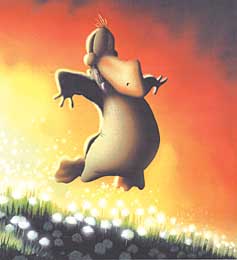 Opus has always wanted to fly
 He approaches her, trailing his whole fortune,
 “I remember the electric chill of my first June morning in Paris as I walked along the river, past vendors and painters
and busy quais, past the reflection of time past and passing time on gray-blue water and white boats carrying
tourists with sweaters and flashing cameras. I walked often, everywhere, eschewing the metro and the trains
and taxicabs. On my many walks near my quaint six-story hotel, I watched the skateboarders in the courtyard
off rue Saint Honoré, in the dusk and in the morning when the light was dim and comforting, and I marveled at
how it stayed light outside until eleven o'clock at night when the sun set in a cantaloupe haze over the wrinkled
Seine. I relished summer nights that felt like autumn, staying out late and shivering on the cold stone benches
near the glass pyramid at the Louvre, eating coconut ice cream and mango sorbet while watching the handsome
waiters at the Café Marly and the gendarmes on roller blades….."
“I remember the electric chill of my first June morning in Paris as I walked along the river, past vendors and painters
and busy quais, past the reflection of time past and passing time on gray-blue water and white boats carrying
tourists with sweaters and flashing cameras. I walked often, everywhere, eschewing the metro and the trains
and taxicabs. On my many walks near my quaint six-story hotel, I watched the skateboarders in the courtyard
off rue Saint Honoré, in the dusk and in the morning when the light was dim and comforting, and I marveled at
how it stayed light outside until eleven o'clock at night when the sun set in a cantaloupe haze over the wrinkled
Seine. I relished summer nights that felt like autumn, staying out late and shivering on the cold stone benches
near the glass pyramid at the Louvre, eating coconut ice cream and mango sorbet while watching the handsome
waiters at the Café Marly and the gendarmes on roller blades….."
 Gift of a friend, the stone Buddha sits zazen,



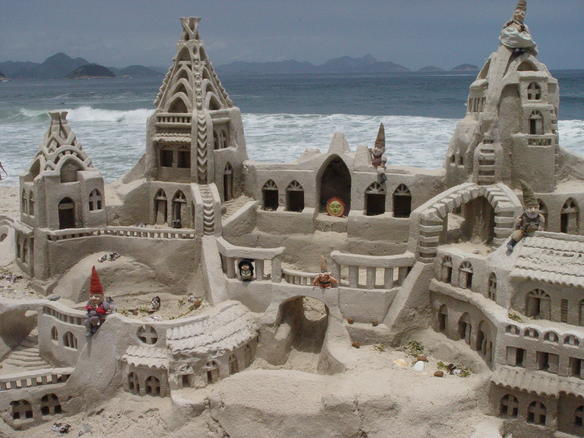


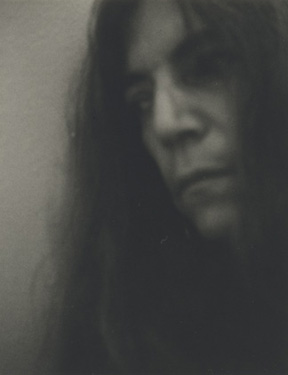





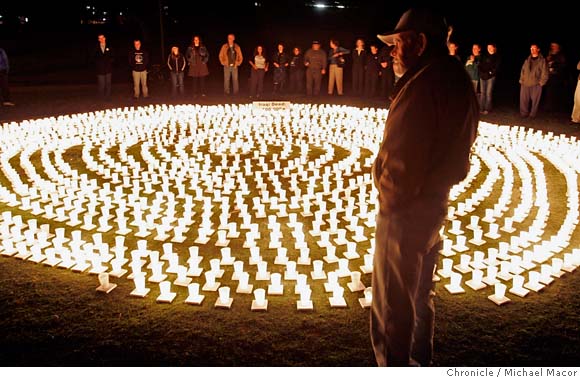








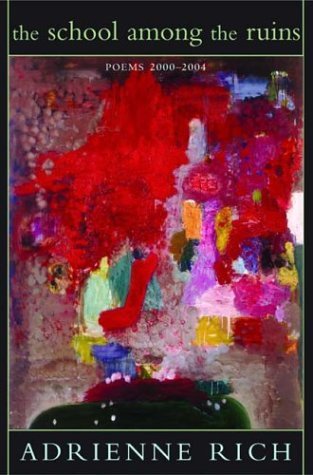



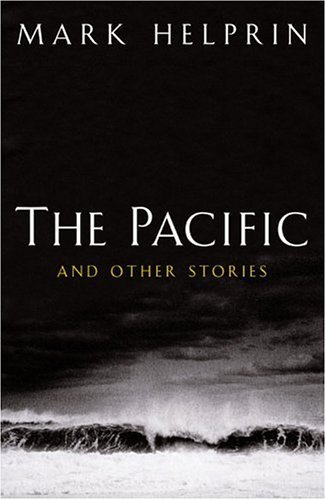




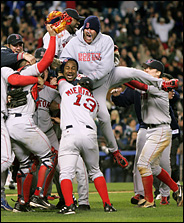
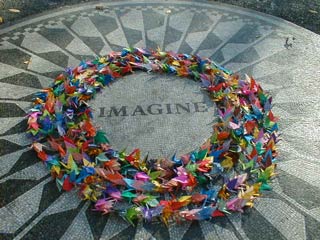







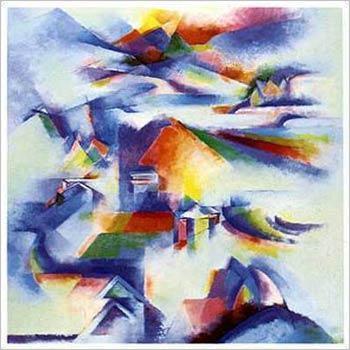

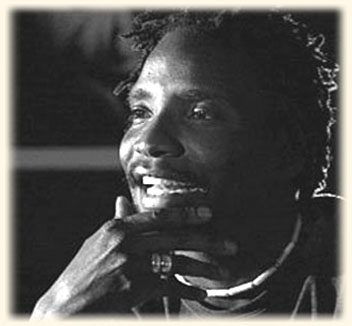

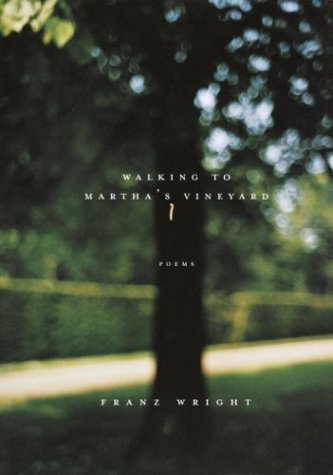
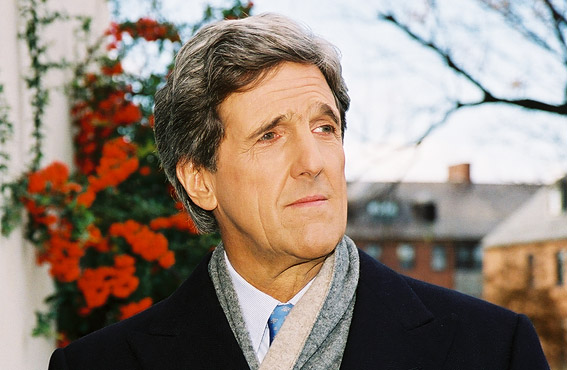










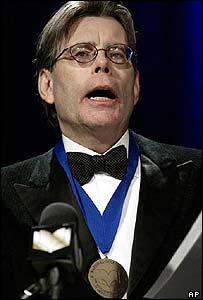













 Washington, D.C.

 Denver, Colorado


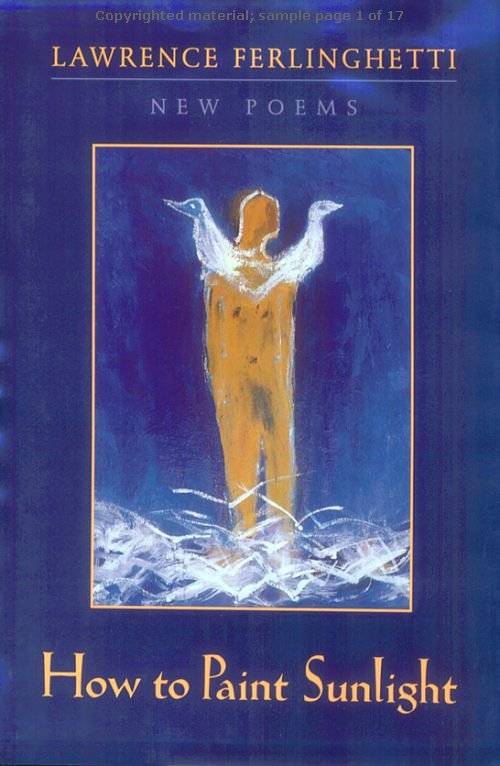


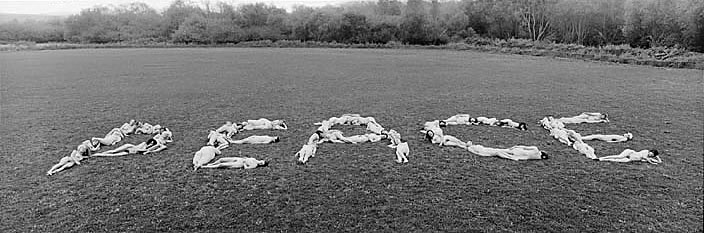




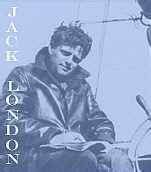



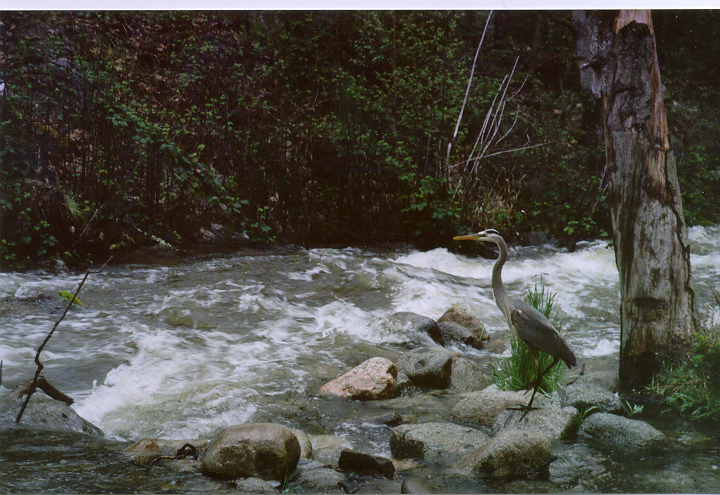
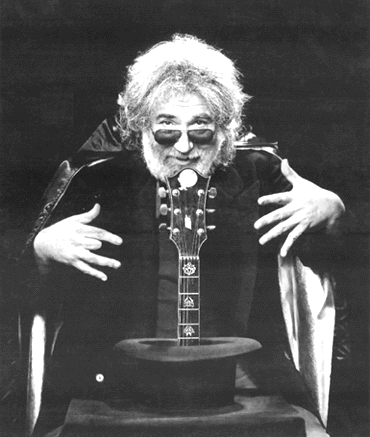


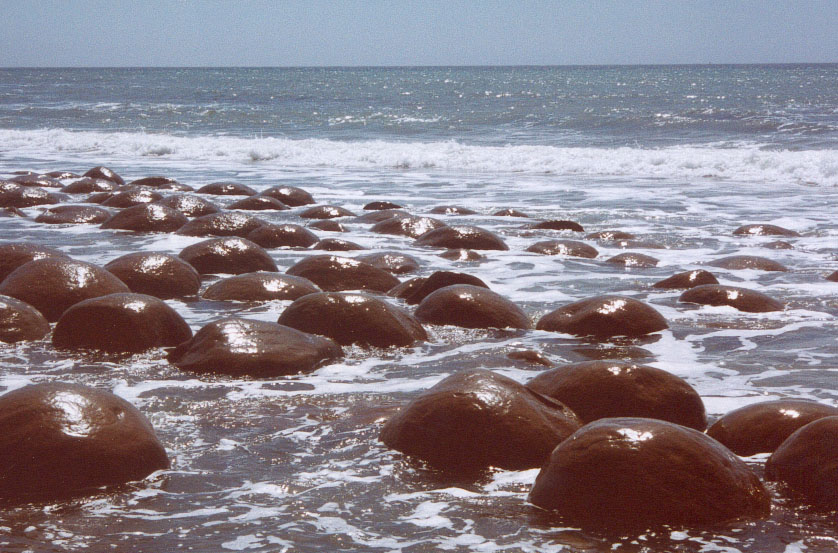
 (See
(See 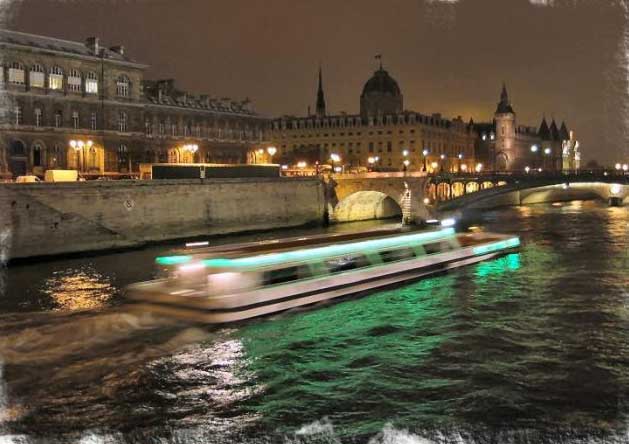


 Colorado Springs, Colorado
 Denver
 from Denver to Salt Lake
 Salt Lake City
 Then step out in desire, out of sleep, from desire. For her, the world, the word. Three herons on three stones won't ignore the sun, but aim as if they were compass needles pointing East. I track it too, for no other reason than winter's icy purple. Dream, memory, & present tense. In dream I board a tramp steamer docked in Veracruz, lone votive candle burning on deck. In memory, herons tucked under evergreens over which snow falls, an Oriental screen, leaving them untouched. This present tense attracts the entire expanse of the world with such desire, it disappears. While I continue in the next breath a future, grasped, & past.
 Denver, Colorado
 Brownfield, Maine
